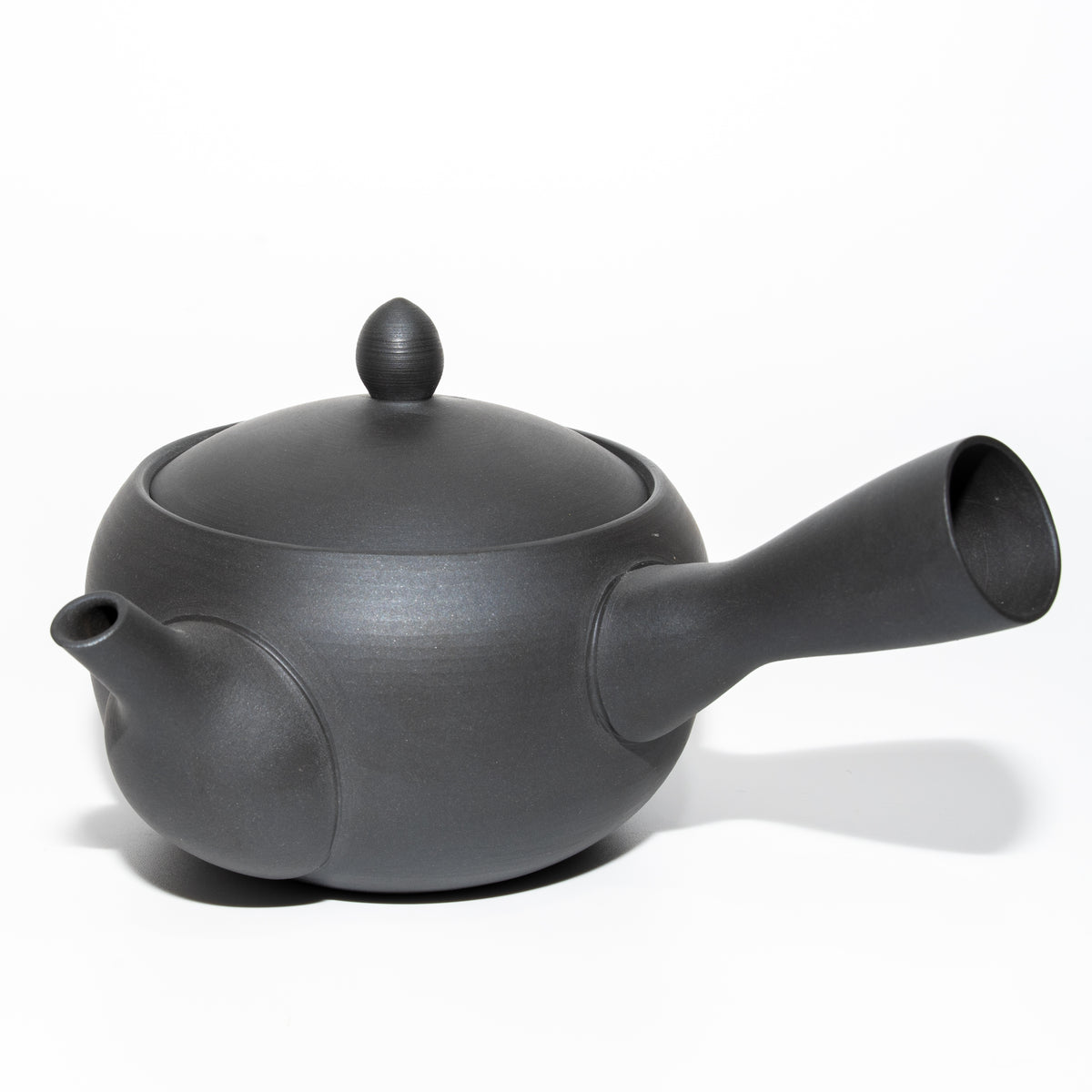

The smallest pour in Japanese tea can feel the most deliberate: water cooled until it is warm rather than hot, leaves opening slowly, liquor gathering in thick drops. We have used a Banko-yaki kyusu — a Japanese teapot from Nankei Pottery — almost daily for years, and it taught us what a well-made lid should feel like: it settles with a soft, precise click. That is exactly the fit worth demanding of a houhin, a small handleless Japanese teapot, or a shiboridashi, a shallow handleless vessel that pours from the rim.
Shiboridashi and houhin sit in the same family of Japanese handleless teapots. They are small, close to the hand, and most useful when the water is cool enough that you can hold the vessel comfortably. If you drink Gyokuro, high-grade Sencha, or a shaded tea that wants a slow, concentrated extraction, these shapes are worth understanding before you buy.
What a houhin and a shiboridashi actually are
Both houhin and shiboridashi are small, handleless Japanese teapots for tiny servings of high-grade tea brewed at low temperature. A houhin has a spout and usually some form of built-in strainer or comb lip. A shiboridashi is wider and lower, with the lid and rim forming the pour. They are close relatives, not competing categories.
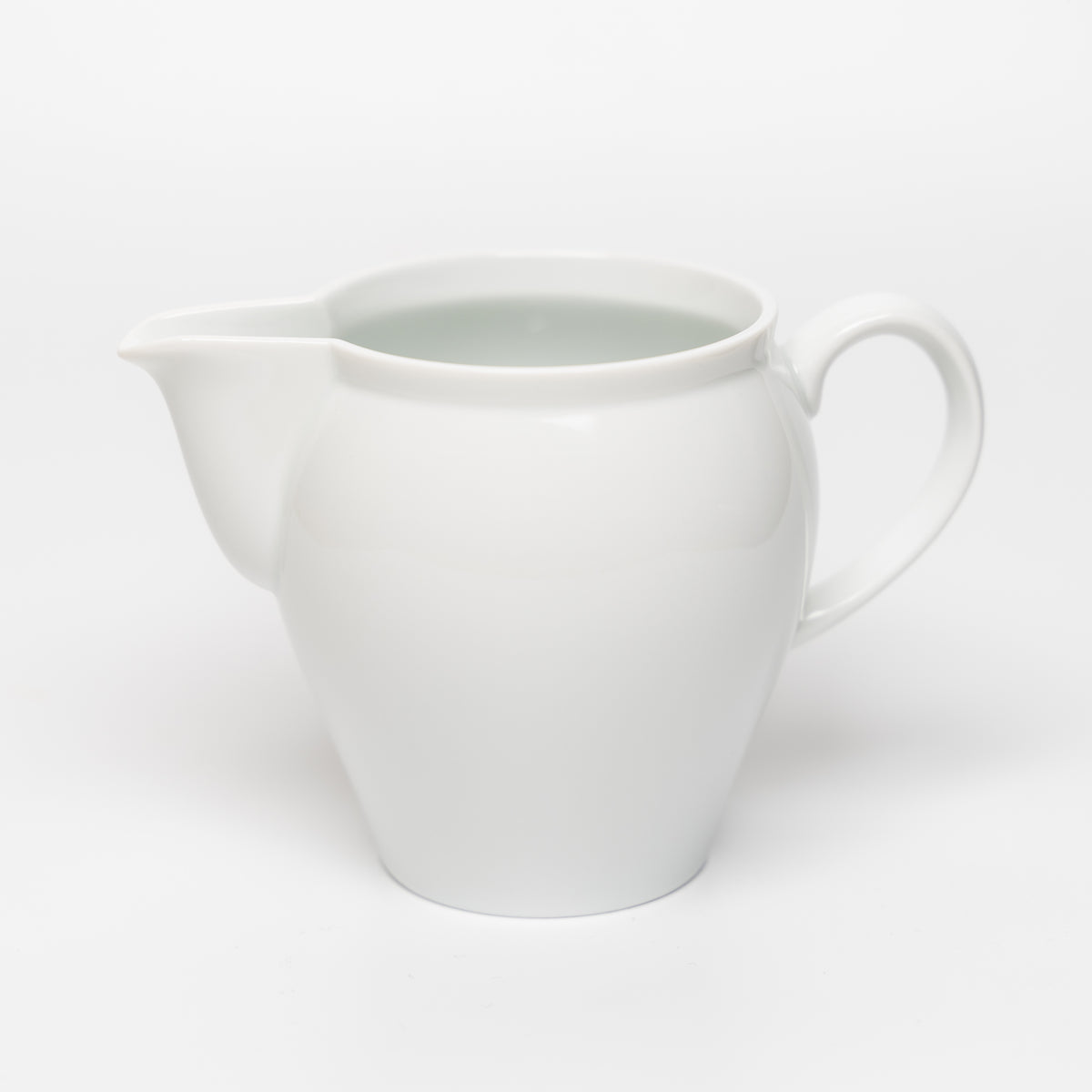
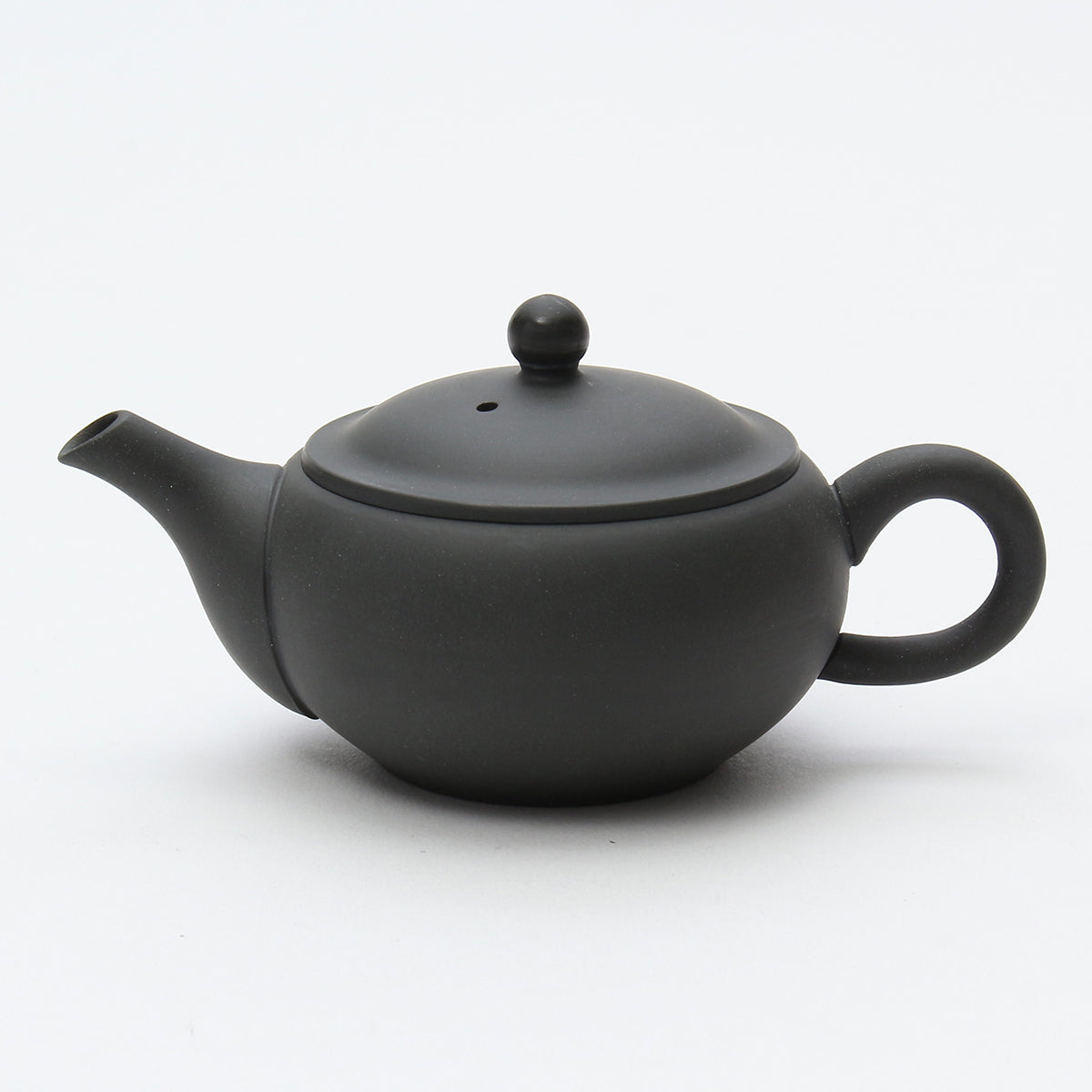
A houhin is broadly a small handleless Japanese teapot. In Japan you may also see the phrase "houhin kyusu," which makes sense because it is still a kind of teapot; it simply removes the side or back handle that most English readers associate with kyusu. The body is usually compact, the lid is easy to hold down with one finger, and the pour is designed for small cups rather than a large shared pot.
A shiboridashi is flatter and more bowl-like. Instead of a protruding spout, it uses a slight gap, notch, or lip between the body and lid. When you tilt the vessel, the tea slips out in a thin stream while the leaf stays behind. Some shiboridashi feel almost like lidded tasting bowls. Others are made with more pronounced pour lips, but the working idea is the same: open leaf space, direct contact, slow control.
Why they have no handle
The missing handle is not an inconvenience. It is the design cue. If the water is too hot to hold, it is probably too hot for the teas these vessels are designed to showcase. Gyokuro and top Sencha often taste best when the water has cooled enough for amino-acid sweetness and umami to come forward before bitterness takes over. The handleless form keeps that lesson in your fingers.
There is also a sensory reason for the scale. In a small handleless pot, the first infusion of Gyokuro can look pale jade-gold, almost quiet in the cup. The aroma lifts — steamed greens and a soft marine note.
The first sip can open savory, with an umami that feels dense rather than loud; mid-palate, a gentle sweetness often gathers around the tongue. The finish tends to stay clean and lightly dry, and the warmth sits close in the chest. Small volume makes that sequence easier to notice.
Houhin vs shiboridashi: the difference, and which to reach for
A houhin gives a cleaner, more directed pour through its spout and strainer, while a shiboridashi gives broader leaf contact and a slower pour from the rim. Reach for a shiboridashi for very concentrated Gyokuro drops and careful tasting; choose a houhin when you want the same low-temperature style with a little more control.
The simplest distinction is the pour. A houhin behaves like a tiny teapot: lift, tilt, pour through a spout, stop. A shiboridashi behaves more like a lidded bowl made for tea: hold the lid slightly in place, tilt the whole vessel, and let the tea escape through the gap. Both require attention, but the hand movement is different.
| Feature | Houhin | Shiboridashi |
|---|---|---|
| Shape | Small handleless teapot with a defined body | Low, wide bowl with a fitted lid |
| Pour | Spout or formed lip, usually more controlled | Lid-and-rim gap, slower and more tactile |
| Leaf space | Compact, good for repeated small infusions | Very open, useful when leaves need to spread |
| Best use | Gyokuro, Kabusecha, refined Sencha | Top Gyokuro, tasting, thick first infusions |
If your main concern is neat pouring, the houhin is often easier. The spout gives the hand a clearer target, and many models have a built-in strainer or a shaped lip that slows the leaves. This matters when you are serving two or three small cups and want the liquor to divide evenly.
If your main concern is leaf contact, the shiboridashi has its own charm. The wide floor lets needle-like Gyokuro leaves lie open rather than mound in a small chamber. The pour is slower and less insulated from the hand, which is part of the point. You are not brewing in the background while doing something else. You are watching the leaf, the surface, and the final drops.
Do you need a separate strainer with a shiboridashi? Usually no. The lid and pour lip are the filter, and the leaf is held back by the narrow gap as you pour. Very fine broken leaf may always slip through a little, but that is different from needing a basket infuser. A basket would crowd the leaf and defeat the reason to use the vessel.
Houhin, shiboridashi, kyusu, or gaiwan: choosing the right vessel
A handled kyusu is the everyday Japanese teapot for larger Sencha servings, while a houhin or shiboridashi is the handleless low-temperature specialist for small, high-grade servings. A gaiwan, a Chinese lidded bowl, is more versatile at higher temperatures. Match the vessel to the tea, the heat, and how much control you want in the pour.
The word kyusu can be broad in Japanese, but in English shopping and brewing conversations it usually means the common handled kyusu, especially the side-handle style used for Sencha. That is the comparison we are making here. A houhin belongs to the larger teapot family, but it should not be treated as just another everyday side-handle pot.
| Point of comparison | Houhin | Handled kyusu |
|---|---|---|
| Handle | No handle; held by the body and lid | Side or back handle keeps fingers away from heat |
| Usual serving style | Small, concentrated cups for one or two people | Everyday Sencha portions, often two or more cups |
| Temperature fit | Low-temperature brewing, especially Gyokuro | Broader range, including hotter daily green tea |
| Choice question | Best when the tea asks for attention and a slow pour | Best when ease, speed, and daily repetition matter |
Houhin vs kyusu
If you brew Sencha every morning, start with the handled kyusu. It is faster, more forgiving, and built around the quick pour that Japanese green tea often needs. Our guide to choosing a Japanese kyusu covers handle types, sizes, and strainer designs in more detail, so we will keep the boundary clear here.
Choose a houhin when the tea itself is asking you to slow down. Gyokuro, Kabusecha, and very refined Sencha reward a smaller pot because the liquor is more concentrated and the temperature is lower. The vessel becomes a reminder to reduce the water, reduce the heat, and pay attention to the last drops.
How they compare to a gaiwan
A gaiwan is wonderfully adaptable. It can brew oolong, white tea, Chinese green tea, pu'er, and many other teas across a wide range of temperatures. The lid controls the leaf, and the bowl gives plenty of room. For Japanese shaded tea, though, the houhin and shiboridashi feel more specialized. They are smaller, usually easier to pour at low volume, and shaped around the dense, short infusions that Gyokuro drinkers often want.
The practical difference is heat. A gaiwan is often used with hotter water, and the fingers learn to handle that heat through speed and grip. A houhin or shiboridashi for Gyokuro should not demand that kind of race. If it burns your fingers, cool the water before blaming your technique.
How to brew Gyokuro and high-grade Sencha in a houhin or shiboridashi
For Gyokuro, we recommend starting with generous leaf, water cooled to about 50-60°C, a short, quiet steep, and a complete pour to the last drop. For high-grade Sencha, begin a little warmer, around 60-70°C. These are craft starting points, not lab rules, and they should be adjusted to the tea in front of you.
This section follows the same low-temperature logic as our Gyokuro brewing guide and our explanation of how water temperature changes extraction. Treat these as starting points, not fixed rules — once you know your own vessel, leaf, and water, adjust from here and keep your own notes.
- Warm the vessel, then empty it. The clay or porcelain should feel gently warm, not hot. This removes the chill from the pot without pushing the first infusion too high.
- Add more leaf than you would for a casual Sencha pot. For Gyokuro, a generous layer across the floor of the vessel helps create the thick, savory first infusion these pots are made for.
- Cool the water before it touches the leaf. Use a cooling cup or move the water between vessels until it feels warm enough to hold. The aroma should lift quietly, not rush out as steam.
- Pour slowly and cover. In a shiboridashi, the wide surface lets the leaves relax outward. In a houhin, swirl only if the leaf looks unevenly wet; too much movement can make fine leaf cloud the liquor.
- Wait briefly, then pour every drop. The last drops often carry the densest flavor. Hold the lid steady and keep pouring until the stream breaks.
- For the second infusion, use slightly warmer water and a shorter wait. The leaves have already opened, so the next cup will arrive faster.
For high-grade Sencha or Kabusecha, keep the same structure but loosen the intensity. Use a little more water, a slightly higher temperature, and a quicker pour. If your tea is deep-steamed or very fine, our guide to brewing Sencha and Fukamushi Sencha will help you think through leaf texture and drainage.
One useful check is the feel of the vessel. A handleless pot should be comfortable enough to hold with care. Warm is right. Painfully hot is a signal that the temperature is wrong for this style of brewing, even before the cup tells you.
Choosing one: porcelain or stoneware, size, and pour
Choose porcelain if you want a neutral vessel that shows liquor color clearly and rinses cleanly. Choose stoneware if you want more tactile character and a pot that may soften the feel of green tea over time. For one or two cups, we would start around 80-150mL, then judge the lid fit and pour before ornament.
Porcelain is the safe first choice for many Gyokuro drinkers. It does not hold much memory from previous teas, so the aroma stays clear from session to session. The white interior also makes the liquor easy to read: pale gold, jade, or a deeper green when the leaf is finer. If you move between teas often, our guide to porcelain teaware explains why that neutrality is so useful.
Porcelain vs stoneware
Stoneware asks for more commitment. Unglazed or lightly glazed clay can develop character with repeated use, and many tea drinkers enjoy the way Japanese clay changes the feel of Sencha or Gyokuro. For a wider material map, including clay, glaze, and porcelain, see our guide to Japanese teaware materials.
The craft experience behind this guide comes from Japanese kyusu, not from owning a houhin or shiboridashi ourselves. At Nankei Pottery in Yokkaichi, Mie, Araki-san makes Banko-yaki kyusu, and his perspective belongs to that craft context. "What I can control is the clay I choose and the temperature I set," he says. Everything after that belongs to the kiln.
That matters because a handleless teapot still depends on the same quiet fundamentals: clay selection, firing, lid fit, and balance in the hand. Tokoname stoneware has its own history with Japanese teapots, and our article on Tokoname Ware is a good next stop if you want to understand that side of the choice.
The lid and pour matter
Before you worry about decoration, test the working parts. The lid should sit cleanly without wobbling. The edge should not scrape in a way that feels unfinished. The pour should stop when your hand stops, especially in a houhin, where dribble can turn a careful Gyokuro session into a wet tray.
For a shiboridashi, look at the lip and lid gap. It should hold back the leaves without requiring force. If the opening is too wide, leaves escape. If it is too tight, the pour stalls and the leaf keeps extracting while you fight the vessel. A good shiboridashi feels slow by design, not slow because it is awkward.
Care and first use
Rinse a houhin or shiboridashi with hot water only, especially if it is unglazed stoneware. Soap can cling to clay and return in the next cup. Let the vessel dry fully with the lid off before storing it. Porcelain needs no seasoning; unglazed stoneware benefits from repeated use with the same tea family.
For the first use, rinse with warm water and inspect the pour before adding your best tea. Fill the vessel halfway, hold the lid as you would during brewing, and pour into a cup. This tells you how quickly the stream starts, where your fingers want to sit, and whether the lid feels secure.
After brewing, remove the leaves promptly. Gyokuro leaves can be soft and cling to the rim, so use water and your fingers rather than a hard tool that might chip the edge. Leave the lid beside the body until both are dry. A closed damp pot is the easiest way to create stale aroma.
If the piece is unglazed, dedicate it narrowly. Gyokuro and high-grade Sencha can share a vessel more naturally than Hojicha and Gyokuro, because roasted aroma has a way of staying behind. Porcelain is more flexible, which is one reason we like it for people still deciding what they brew most.
Handleless teaware should become more natural with use. The hand learns where the heat sits. The thumb learns the lid. The pour becomes less hesitant. That familiarity is part of why people keep these small pots close even when a handled kyusu would be easier.
At FETC, we do not think of a houhin or shiboridashi as a status object. It is a specific instrument for a specific kind of tea: small volume, low temperature, full attention. If that sounds like the way you want to drink Gyokuro, it may be the right shape.
Our teapot collection changes with availability, and we are careful not to force a product link when a shape is not in stock. Use this guide first to choose the vessel type, then let the current selection catch up to the tea you actually brew. For the tea side of the pairing, continue with how to brew Gyokuro or the broader guide to what Gyokuro is.
Frequently Asked Questions
What is the difference between a houhin and a shiboridashi?
A houhin is a small handleless Japanese teapot with a spout and usually a built-in strainer or shaped lip. A shiboridashi is lower and wider, pouring through the gap between the lid and rim. Choose houhin for cleaner control, shiboridashi for very open leaf contact and slow, concentrated pours.
What is the difference between a houhin and a kyusu?
A houhin is broadly a small handleless Japanese teapot, but the usual comparison is against a handled kyusu. A handled kyusu is the everyday workhorse for Sencha and larger pours. A houhin is smaller, used with lower-temperature water, and best when Gyokuro or refined Sencha needs a concentrated infusion.
What tea is a houhin best for?
A houhin is best for Gyokuro, Kabusecha, and high-grade Sencha brewed in small amounts at lower temperature. Those teas reward control: more leaf, less water, and a careful pour to the last drop. It is less useful for large daily servings.
How do you brew gyokuro in a houhin?
Start with generous Gyokuro leaf, water cooled to about 50-60°C, and a short, quiet steep. Warm the vessel first, pour low-temperature water over the leaf, wait briefly, then pour every drop into small cups. For the second infusion, use slightly warmer water and a shorter wait.
Do you need a separate strainer with a shiboridashi?
Usually no. A shiboridashi uses the lid and rim as the strainer: the narrow gap lets liquor pour while holding back most leaves. Very fine broken leaf may slip through, but a basket infuser would crowd the leaf and remove the open contact that makes the vessel useful.