
The small spouted bowl that came with your Japanese tea set is probably a yuzamashi, a water cooler for tea. It sits between kettle and leaves: hot water goes in, heat escapes through the open bowl, and the cooled water goes next into the pot. We care about this step because our temperature tastings keep showing the same pattern: when water cools, sharper notes retreat and sweetness or aroma can step forward. That does not make a yuzamashi mandatory, and it does not make every tea better at low heat. It does make the vessel worth understanding. This guide explains what the bowl does, why green tea sometimes needs cooler water, how to use one, how it differs from related Asian teaware, and when a normal mug is enough.
What a yuzamashi actually is
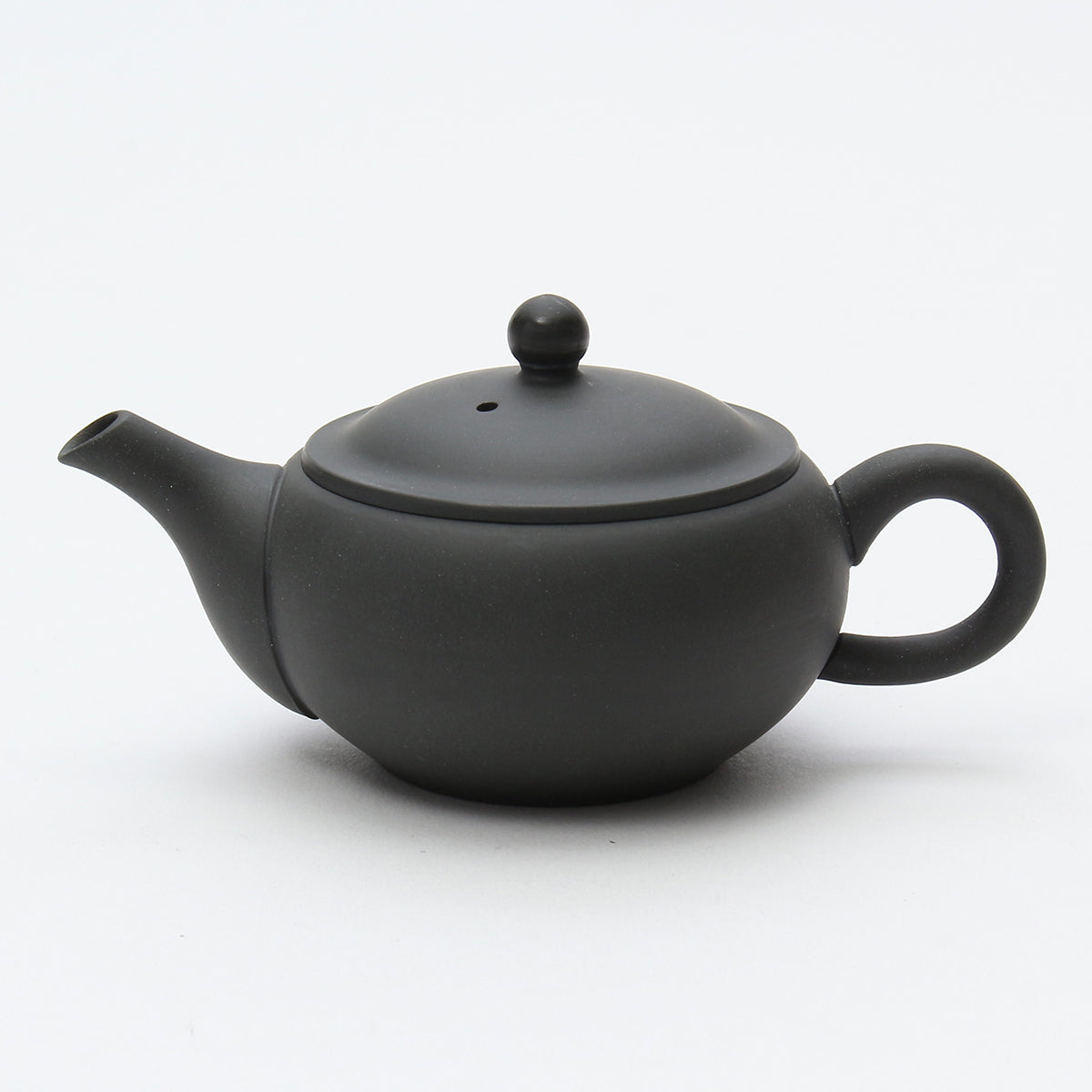
A yuzamashi is the small, wide, usually spouted bowl in a Japanese tea set: the piece that looks useful but does not have a strainer, lid, or obvious drinking role. You pour just-boiled water into it before brewing so the water cools before it touches the leaves. Western tea shops often call it a Japanese tea water cooler.
The word itself is plain: yu means hot water, and zamashi means cooling. The object is plain too. It is not a brewing pot, not a drinking cup, and not a bowl for whisking Matcha. It is a transfer vessel, shaped so water spreads out into a shallow layer and loses heat quickly.
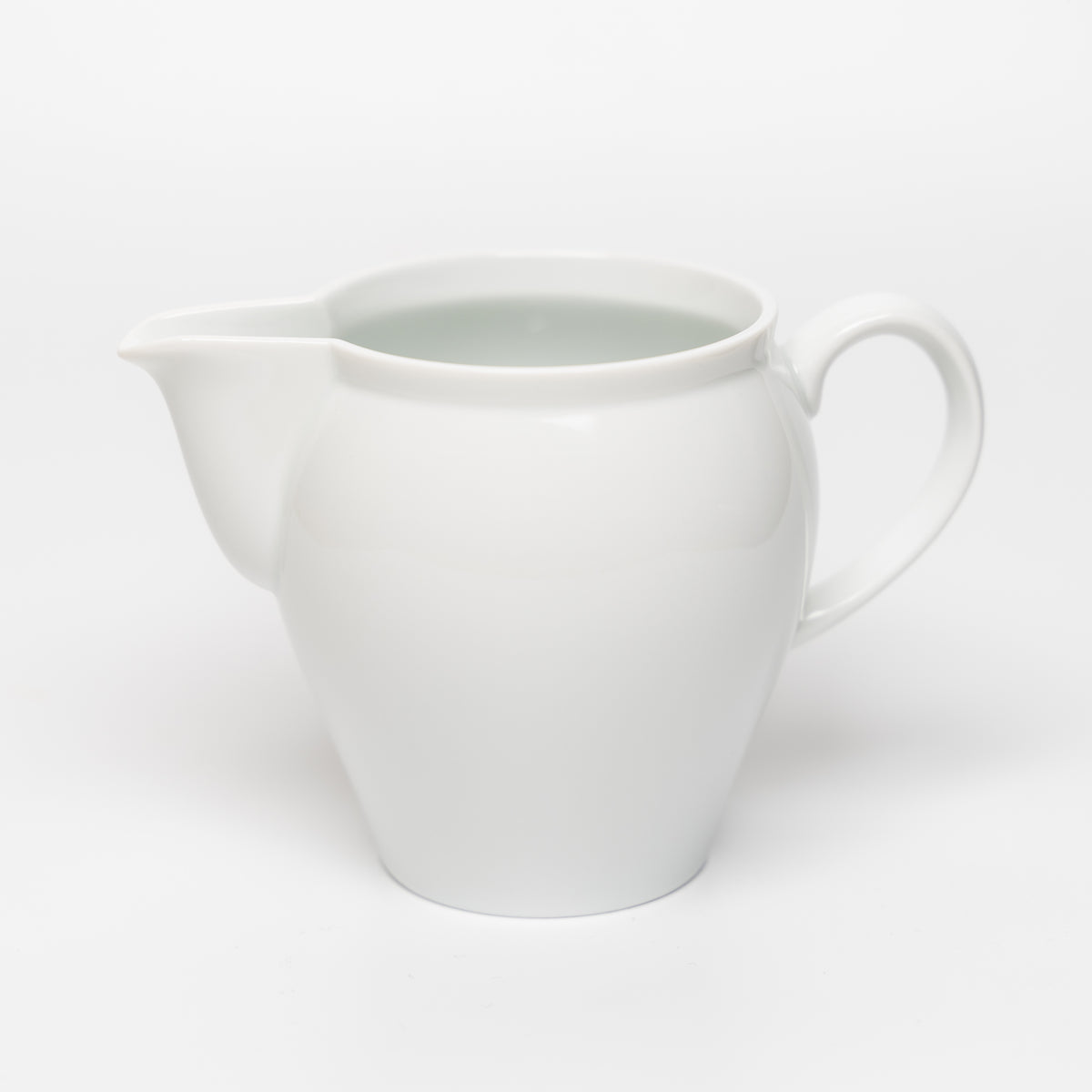
That shape is why people so often ask what it is. A yuzamashi can look like a small sauce pitcher, a handled bowl, or a lipped cup. Some have a pronounced spout; others use a cut lip. If it came with a Japanese green tea set and has no filter, its likely job is to cool water before the tea is brewed.
The English label "water cooler" can also mislead. This is not a chilled-water vessel, and it does not make the tea cold. It takes water that is too hot for a delicate tea and moves it toward a more suitable brewing point. The bowl is deliberately simple because nothing needs to happen inside it except heat leaving the water.
How it cools water
Two things do the work: pouring and surface area. As a rough craft rule, each pour between vessels drops roughly 10°C. The wide mouth matters because exposed water sheds heat faster than water trapped in a narrow kettle or pot.
For teas that need very cool water, the practical method is not a fixed transfer count. It is transfers plus a short rest in the wide bowl; a thermometer makes it certain. That small pause is part of the appeal. Steam thins, the surface quiets, and the step gives you a moment to choose the cup you are trying to brew.
Why cool the water before brewing?
Cooling the water changes what the leaf gives you. Catechins and caffeine extract eagerly in hot water; sweetness and umami, the savory depth prized in shaded tea, come through even at low temperatures. That is why a yuzamashi matters most for high-grade Japanese greens: it helps you approach a softer, sweeter cup without turning brewing into guesswork.
The detailed science belongs in our tea and temperature guide. Here, the important point is practical. A yuzamashi is not magic; it is the tool that lets you make temperature a repeatable part of brewing.
Temperature comparisons across our tastings show the pattern clearly. In our tasting notes for a lower-temperature Sencha comparison, floral and fruity aromas stood out. Bitterness and astringency disappeared, making the tea easy to drink. At a hotter setting, bitterness was more pronounced. In an Asatsuyu session, the cooler cup moved close to Matcha-like sweetness. Then Kamairicha gave us the useful counterpoint: brewed hotter, its sweetness integrated better and the tea felt more complete.
That is the honest lesson. Cooling is a tool for specific teas, not a rule for all tea. It helps when the leaf has sweetness, shade aroma, and umami to protect. It can flatten teas that depend on roast, grain, or pan-fired warmth.
Which teas benefit most
Gyokuro is the strongest use case because it is designed for low-temperature brewing and small, concentrated pours. If you want the full method, our Gyokuro brewing guide keeps the vessel, leaf amount, and steeping time together.
High-grade Sencha, Kabusecha, and some shaded lots also benefit. Everyday Bancha, Hojicha, Genmaicha, black tea, and many oolongs usually prefer hotter water. For Sencha and Fukamushi Sencha technique beyond the cooling step, see our Sencha brewing guide; for what makes Gyokuro itself different, start with our article on Gyokuro.
How to use a yuzamashi
Use a yuzamashi between kettle and teapot. Boil water, pour it into the bowl, let the wide mouth shed heat, then pour the cooled water into your Kyusu, the Japanese teapot, when it suits the tea. As starting points, Gyokuro is usually brewed around 50-60°C and high-grade Sencha around 60-70°C; resting the water in the wide bowl brings it down, and a thermometer confirms it.
- Boil fresh water fully, especially if you are using a kettle that has been sitting for a while.
- Pour the water into the yuzamashi. The sound changes from a kettle hiss to a lower, rounder gurgle, and the steam begins to thin.
- Let the water rest briefly in the wide bowl. The vessel warms in your hands, but the water should no longer feel aggressively hot above the surface.
- Pour the cooled water into the Kyusu over the leaves. The yuzamashi holds water only; it does not hold brewed tea in this step.
- Steep, then pour the tea out evenly into cups or into a serving pitcher if your session needs one.
The key is to keep the sequence clean. Kettle to yuzamashi. Yuzamashi to Kyusu. Tea from Kyusu to cups. If you also use a handleless pot such as a Houhin or Shiboridashi for Gyokuro, the yuzamashi still sits before the brewing vessel in the chain; our Houhin and Shiboridashi guide explains those small pots separately.
You can judge by feel, but feel is approximate. A thermometer is the easiest way to learn your own kettle, room, and vessels. After a few sessions, the visual cues become more meaningful: thinner steam, a calmer water surface, a bowl that warms the palms rather than forcing your hands away.
The amount of water you pour should match the tea session. For a small Gyokuro service, you may be cooling a modest volume; filling a large pitcher halfway is not a failure if the spout still pours cleanly. For Sencha served to several cups, the vessel needs enough room that you can pour smoothly without crowding the lip. This is why capacity and pour shape belong together.
One common mistake is to use the yuzamashi as if it were an extra teapot. Keep leaves out of it. Once tea has infused, it can be served through a separate pitcher if you want even concentration, but the yuzamashi step itself is about water only. That separation keeps the flavor clean and makes the method easier to repeat.
Yuzamashi, Kyusu, gongdaobei, and sukwoo
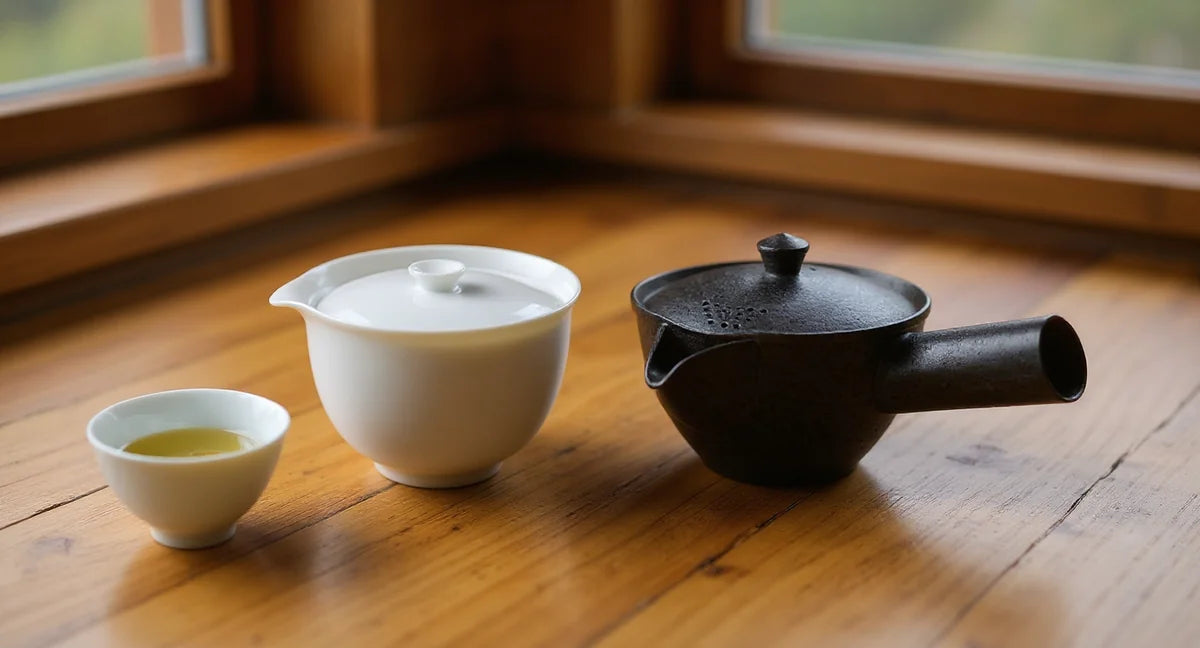
A yuzamashi cools water before brewing. That is different from a Kyusu, which brews the leaves, and different again from a gongdaobei (公道杯 / 茶海), a gongfu tea fairness pitcher used to serve already-brewed tea evenly. The Korean sukwoo (숙우) is closer to the yuzamashi: a pre-brew water-cooling bowl used in Korean tea practice.
The silhouettes can overlap, especially when a vessel has a lip and a pitcher-like body. The job is what separates them.
- Yuzamashi: holds hot water before brewing; cools water for Japanese green tea.
- Kyusu: holds leaves and water during brewing; pours finished tea through a filter or strainer.
- Gongdaobei / cha hai: holds brewed tea after infusion; evens concentration before serving multiple cups.
- Sukwoo: holds hot water before brewing; cools water in Korean darye tea practice.
This distinction matters because English product names can blur the categories. Our own catalogue uses both Chakai and Yuzamashi language for some pitcher-shaped vessels, which reflects how the form travels between tea cultures. Still, the process is different: a gongdaobei receives tea after the leaves have infused, while a yuzamashi receives water before the leaves see it.
A sequence makes the difference easy to remember. In a Japanese green tea session, water may move from kettle to yuzamashi to Kyusu, then tea moves from Kyusu to cups. In gongfu service, brewed tea often moves from pot or gaiwan to gongdaobei, then from gongdaobei to cups. The pitcher shape overlaps, but the timing tells you which job the vessel is doing.
Yuzamashi vs Kyusu
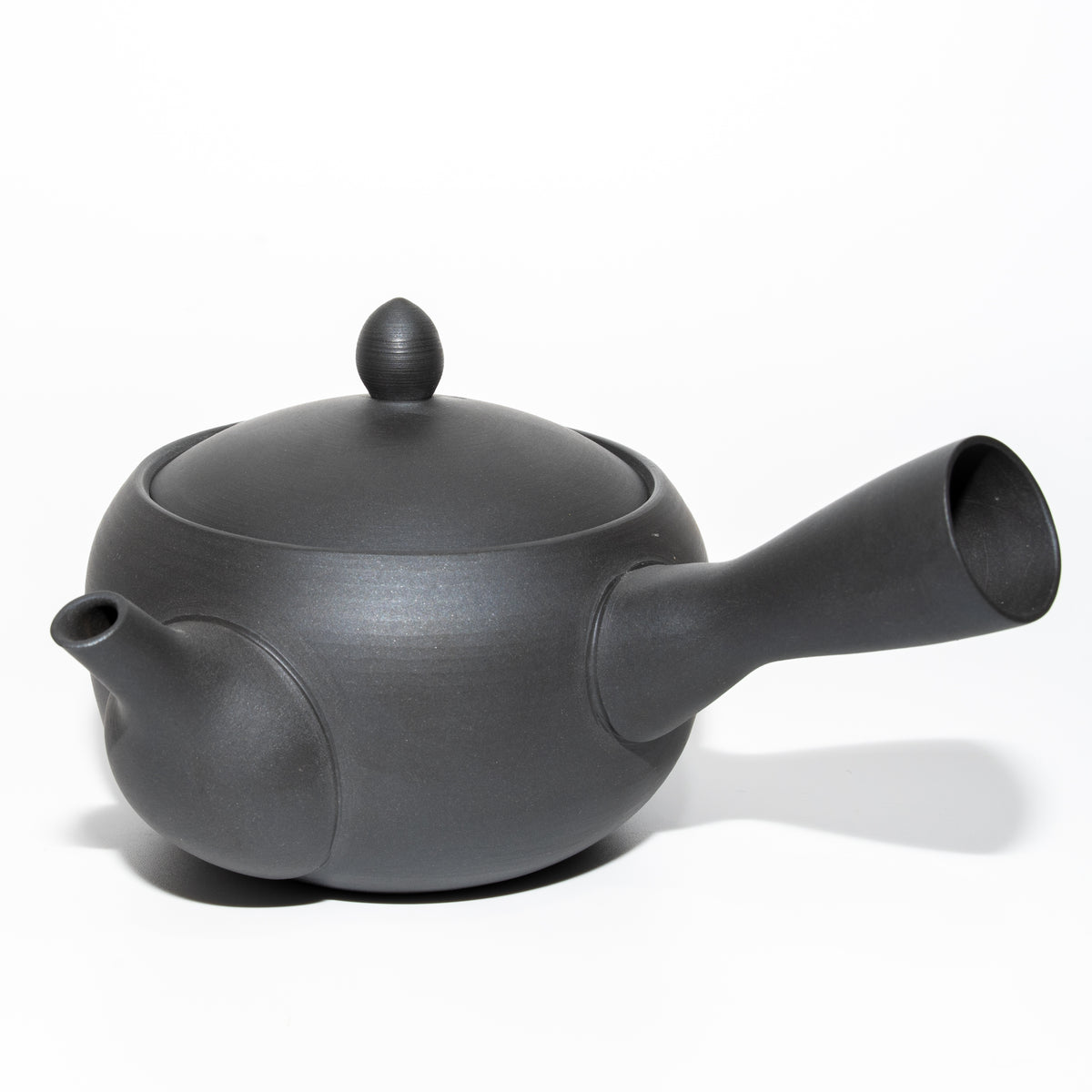
The shortest answer is that they are companions, not rivals. The Kyusu is the brewing pot. The yuzamashi is the water-cooling vessel that prepares water for the Kyusu. If you are choosing a teapot, mesh, handle angle, and clay all matter; we keep that depth in our Kyusu guide so this article can stay focused on the water cooler itself.
How to choose a yuzamashi
Choose by material, capacity fit, and pour control. Porcelain stays neutral and rinses clean; stoneware carries more clay character and can hold heat differently. Size should follow the session: Gyokuro often uses 30-50mL per person or 60-80mL for two, so a small vessel can be enough; serving several Sencha cups or using it as a pitcher points toward a larger class.
Material changes both care and feel. Porcelain is dense, glazed, and easy to rinse, which suits a vessel that only holds water. Our guide to teaware materials explains the broader difference between porcelain, stoneware, and clay bodies. For the specific regional context, see Hasami ware and our article on porcelain teaware.
Stoneware has a different presence. Tokoname and Banko-yaki pieces can feel earthier in the hand, and unglazed surfaces may change subtly with use. If that side interests you, our article on Tokoname ware is a useful material companion, even when the specific vessel in front of you is a yuzamashi rather than a teapot.
Capacity should come from how you brew, not from an abstract recommended range. Gyokuro is served in small amounts, so a compact vessel can be entirely practical. If you brew Sencha for several people, or if you want the vessel to double as a serving pitcher, a larger body makes more sense. The AZMAYA / 東屋 Yuzamashi / Chakai Large in our product family is 430mL Hasami porcelain from Hakudake Kiln, which places it in that larger service role.
Shape is the other half of size. A vessel can have enough nominal capacity and still feel wrong if the lip is too blunt or the body is awkward to tip. Look for a mouth wide enough to cool water quickly, a rim that lets steam escape without feeling enclosed, and a base stable enough that a full bowl of hot water sits securely on the table.
Pour control may matter more than decoration. A good lip starts cleanly and stops cleanly, without a thread of water running down the outside. Weight also matters because a yuzamashi is often lifted while hot. We learned that lesson most clearly from adjacent teaware: Araki-san of Nankei Pottery, a Banko-yaki Kyusu maker, describes pottery as a balance between clay, firing temperature, and what the kiln gives back. In our own daily Kyusu use, a precisely seated lid and confident pour changed how we judged every other piece of Japanese teaware. That habit came from the Kyusu, not the yuzamashi, but it trains the same eye.
Care is simple because the vessel holds water. Rinse with hot water, let it dry fully, and avoid detergent on unglazed stoneware unless the maker says otherwise. Porcelain needs very little: a rinse, a clean towel, and enough air that no moisture stays trapped in the foot.
Do you actually need one?
Honestly, no: you can brew good green tea without a yuzamashi. Any clean mug, teacup, or small pitcher can work as a transfer vessel, and waiting is still a valid technique. A purpose-made yuzamashi earns its place when low-temperature brewing becomes routine: it gives better pour control, capacity fit, fast even cooling, and a second life as a serving pitcher or Chakai.
This is the practical test. If you brew everyday Sencha casually, do not let the absence of a yuzamashi stop you. Pour hot water into a mug, let the heat settle, then move it into the pot when it feels appropriate. You will learn a great deal from that alone.
If Gyokuro, shaded Sencha, or small focused sessions become a regular habit, the argument changes. A dedicated vessel removes some of the awkwardness: no scrambling for a spare cup, no guessing whether the mug is large enough, no splashing from a lip that was never meant to pour. It also makes the cooling step visible. You are not just waiting for the water to cool; you are preparing it for a specific leaf.
There is also a hosting argument. When you brew for more than one person, a yuzamashi can become the quiet organizing vessel on the table. It measures the next pour, cools the water evenly, and, depending on the form, can serve as a Chakai when you want to distribute brewed tea with even strength. That flexibility is useful, but it is still secondary to the main question: whether low-temperature tea is something you reach for regularly.
The ritual point is modest, but real. A yuzamashi stretches the moment between kettle and tea. For some drinkers, that pause is exactly where the cup starts to improve.
Our view is simple: start with what you have. A mug can teach you why cooler water matters, and a thermometer can teach you what your hands cannot yet read. If Gyokuro becomes a steady favorite, a purpose-made vessel starts to make sense because it makes the cooling step clean, visible, and easy to repeat without making the session feel elaborate. Our teaware collection includes pieces for this kind of setup, and the AZMAYA Yuzamashi / Chakai Large is the 430mL Hasami porcelain large pitcher in that family. For the brewing side, pair this with the Gyokuro method; for the reason temperature changes the cup, keep the temperature guide open beside it.
Frequently Asked Questions
What is a yuzamashi?
A yuzamashi is a small, wide, usually spouted bowl used to cool hot water before brewing Japanese green tea. It has no strainer and no lid because it is not a teapot. Its job is to sit between kettle and leaves, giving the water room to lose heat before it enters the brewing vessel.
Do you need a yuzamashi to brew green tea?
No. You can brew good green tea without a yuzamashi by using a clean mug, teacup, or small pitcher as a transfer vessel, or by waiting for water to cool. A dedicated yuzamashi becomes useful when low-temperature brewing is routine because it improves pour control, capacity fit, and repeatable cooling.
Which teas benefit most from a yuzamashi?
Gyokuro benefits most because it is brewed with cooler water and small, concentrated pours. High-grade Sencha, Kabusecha, and shaded green teas can also gain sweetness and aroma when the water is cooled first. Everyday Bancha, Hojicha, Genmaicha, black tea, and many oolongs generally prefer hotter water.
Is a yuzamashi the same as a gongdaobei (fairness pitcher)?
No. A yuzamashi cools water before brewing, while a gongdaobei or cha hai receives already-brewed tea so multiple cups pour with even concentration. They can look similar, especially when both have a pitcher shape, but they sit at different points in the sequence. Korean sukwoo is closer to a yuzamashi.
How do you use a yuzamashi?
Boil water, pour it into the yuzamashi, and let the wide bowl release heat before the water goes into the teapot. For very cool brewing, use transfers plus a short rest in the bowl, and use a thermometer if precision matters. The yuzamashi holds water only; brewed tea usually leaves the teapot for cups or a serving pitcher.