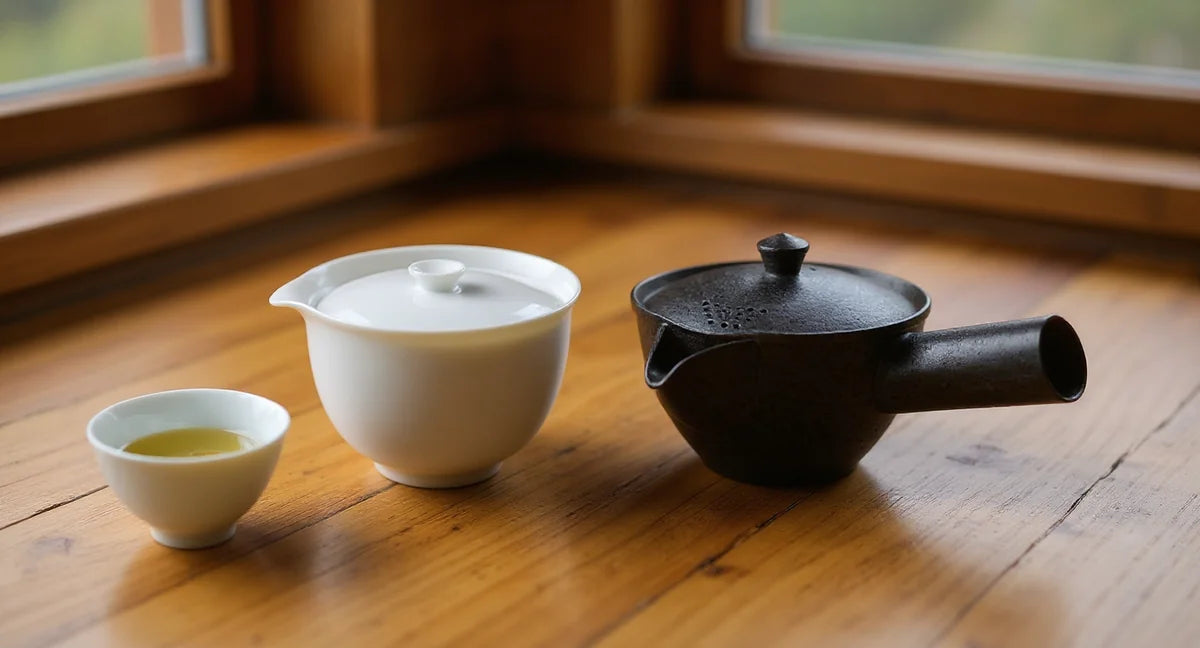
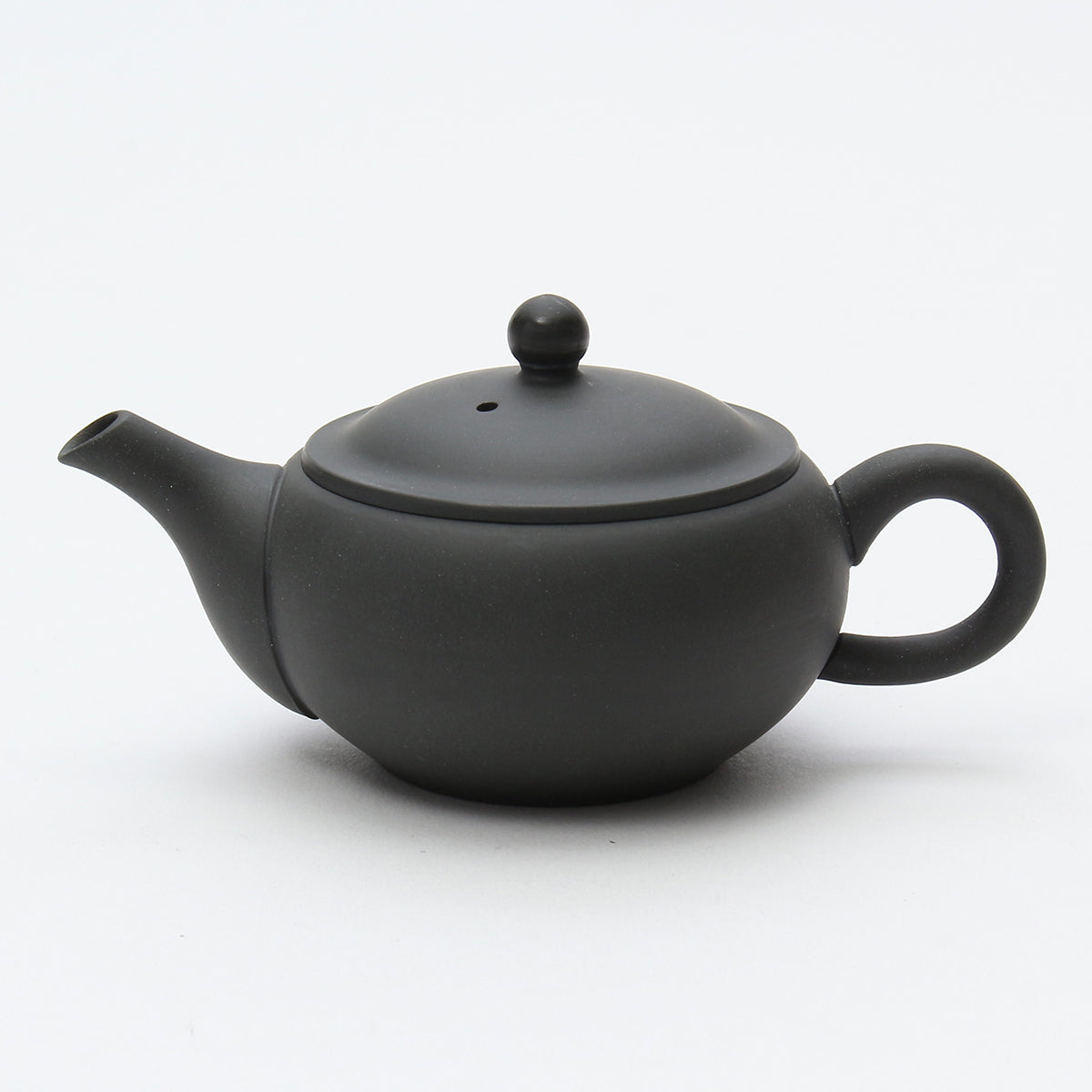
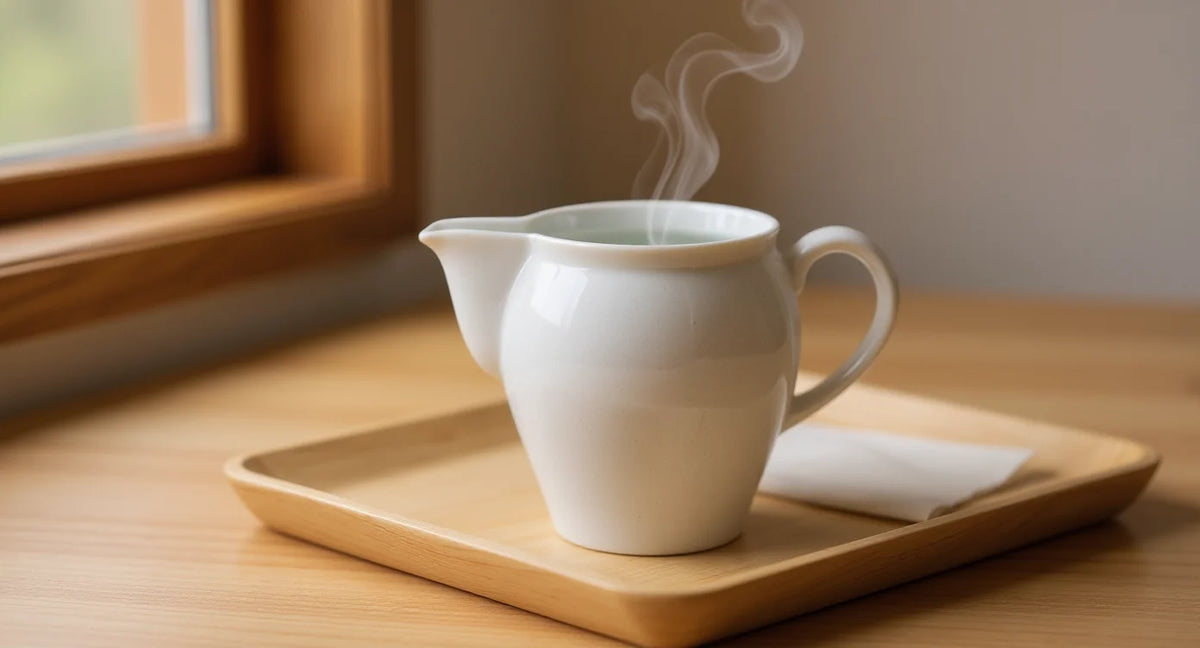
What Is a Yuzamashi? Japan's Tea Water Cooler
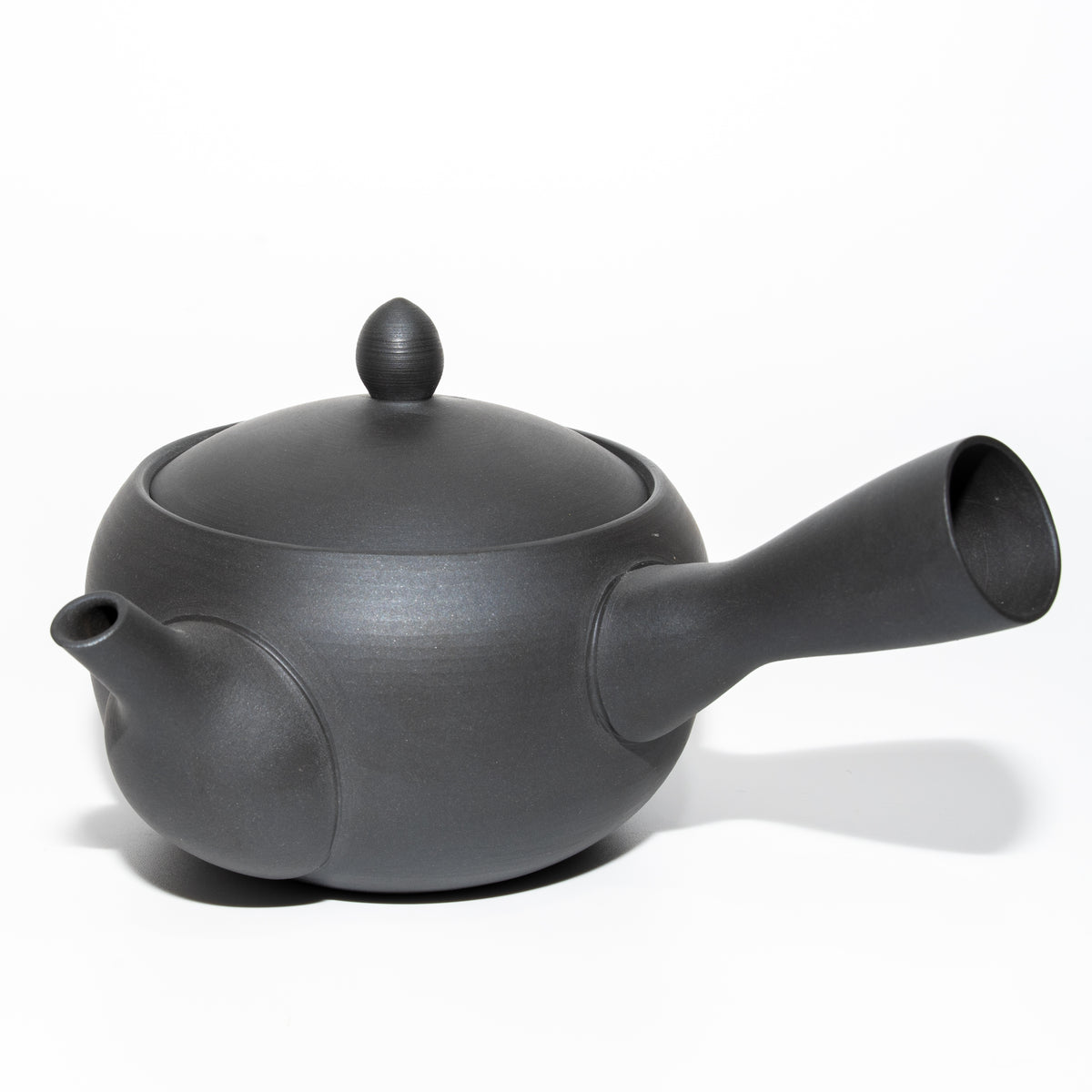
The small spouted bowl that came with your Japanese tea set is probably a yuzamashi, a water cooler for tea. It sits ...
Updated Jul 2026
Read
Japanese Tea Encyclopedia
Kyusu, chawan and the vessels of Japanese tea — what they're made of, who makes them, and how to choose.
22 guides
The small spouted bowl that came with your Japanese tea set is probably a yuzamashi, a water cooler for tea. It sits ...
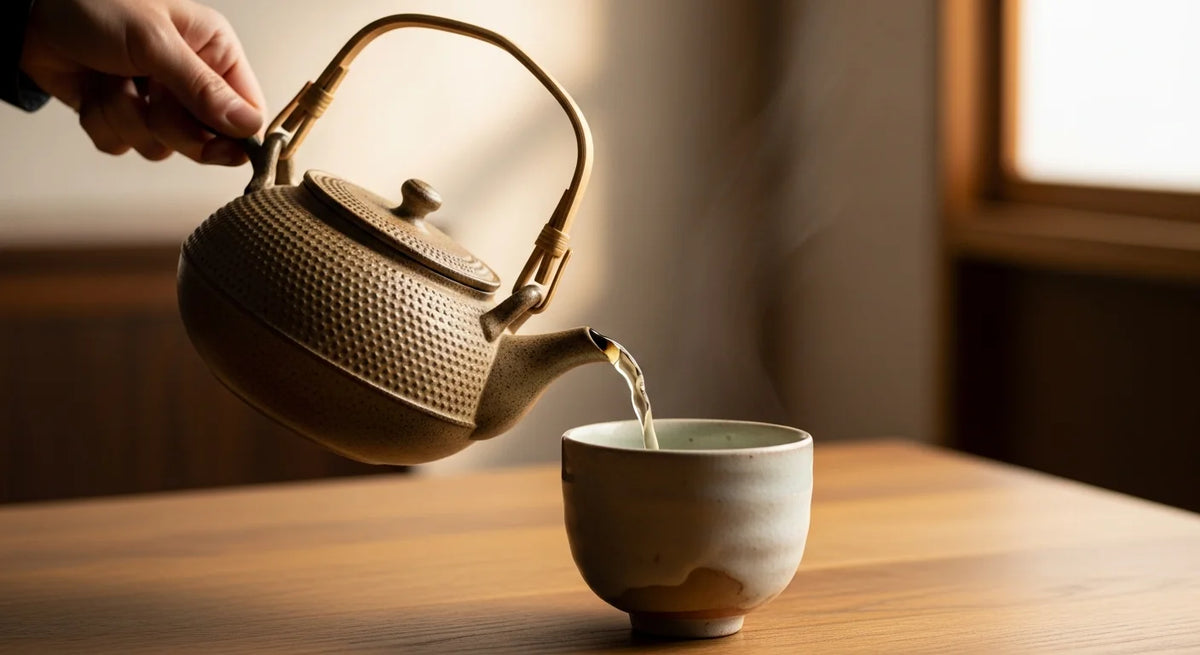
The smallest pour in Japanese tea can feel the most deliberate: water cooled until it is warm rather than hot, leaves...
The first thing you notice is the weight. A clay body warm from the rinse water, a lid held steady with the thumb, th...
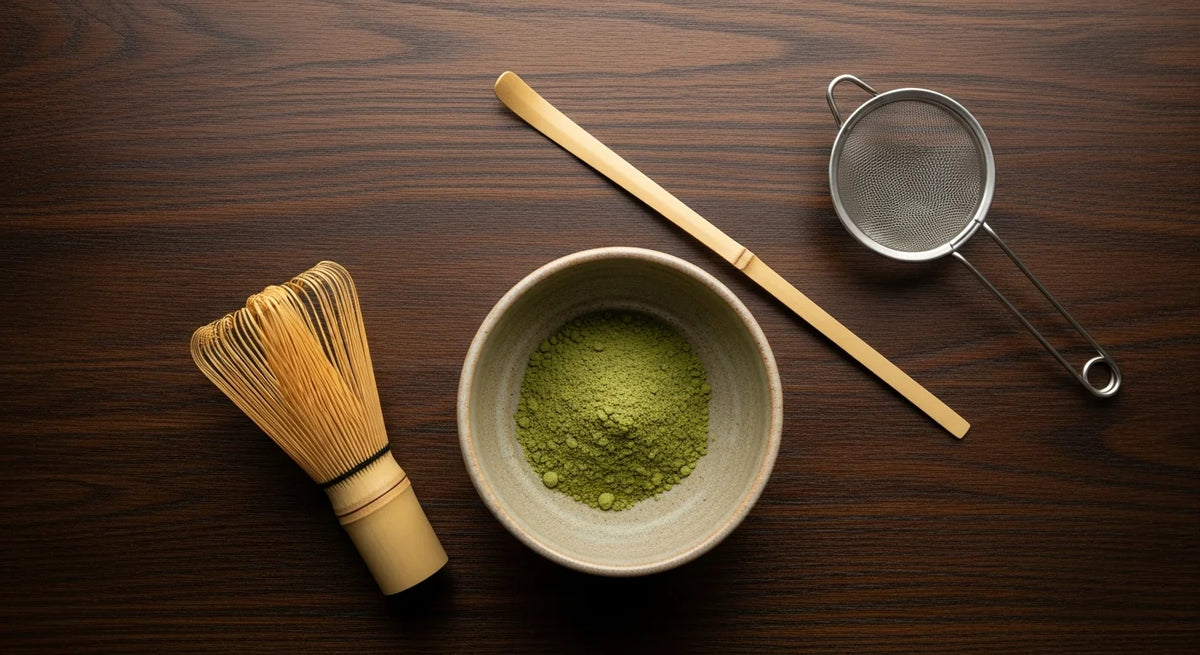
The tools look modest when they are laid out together: a bamboo Matcha whisk, or chasen, beside a wide Matcha bowl, o...
Shigaraki Ware: Japan's Ancient Ash-Glazed Pottery Before you fill a Shigaraki teapot with water, hold it a moment. ...
Echizen Pottery: Japan's Quietest Ancient Kiln Tradition Echizen ware may be the most understated of Japan's Six Anc...
Takatori Ware: The Tea Ceremony Kiln of Fukuoka's Enshu Tradition Takatori ware has one of the clearest purposes of ...
Tamba Ware and the Six Ancient Kilns Deep in the mountains of Hyogo Prefecture, roughly thirty kilometres north of t...
Banko Ware: Japan's Heat-Retaining Purple Clay Teapot Tradition Pick up a Banko teapot and the first thing you notic...
Seto Ware: The Kiln Town That Named All Japanese Ceramics There is a word in Japanese — seto-mono (瀬戸物) — that means...
Hagi Ware: The Pottery That Changes Colour Over a Lifetime of Tea A Hagi chawan holds the colour of pale cream when ...
Mino ware is the broad ceramic tradition of Japan's Mino region in Gifu Prefecture. And it matters for two very diffe...
From reading to drinking
Handcrafted teaware from seven Japanese kilns — and the stories of the people who make it.