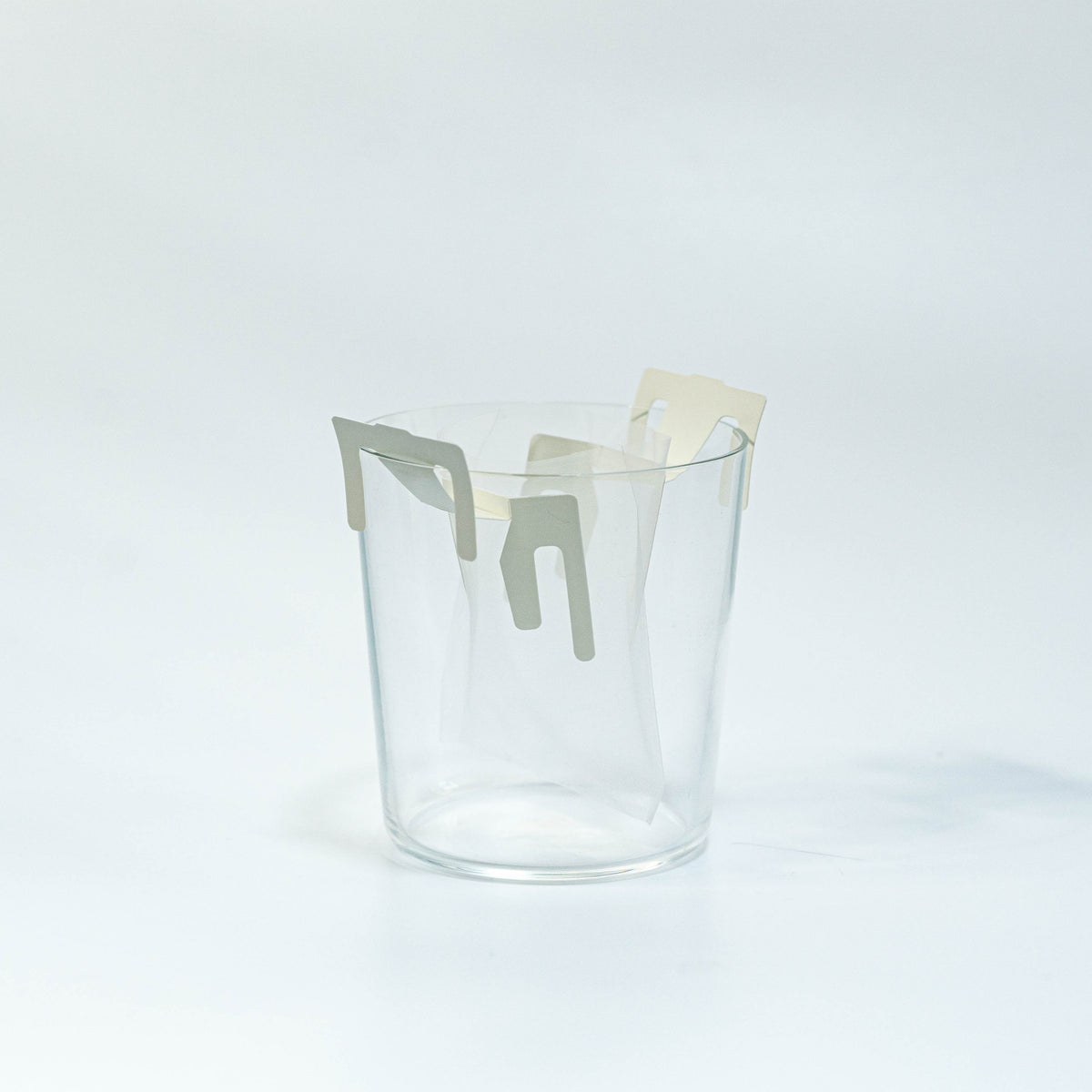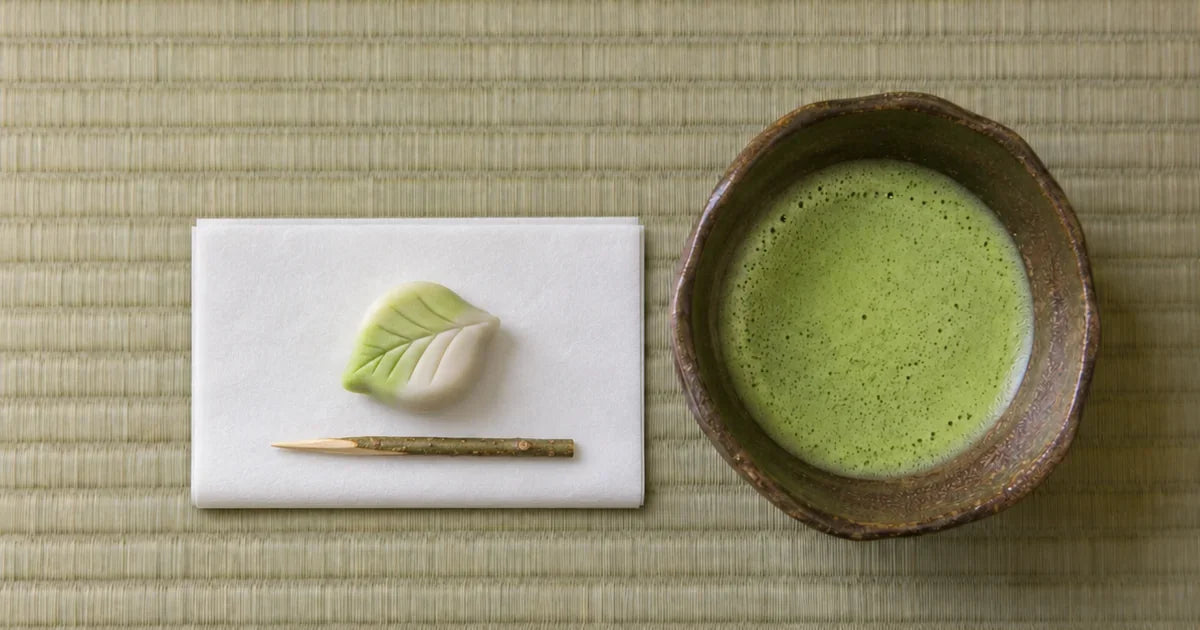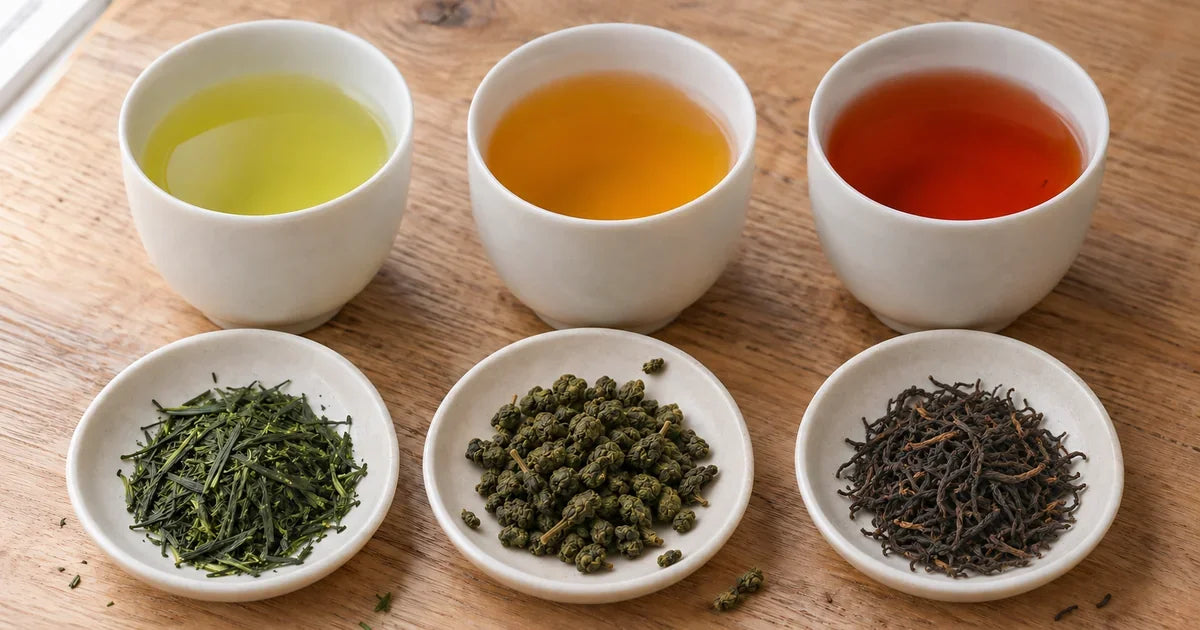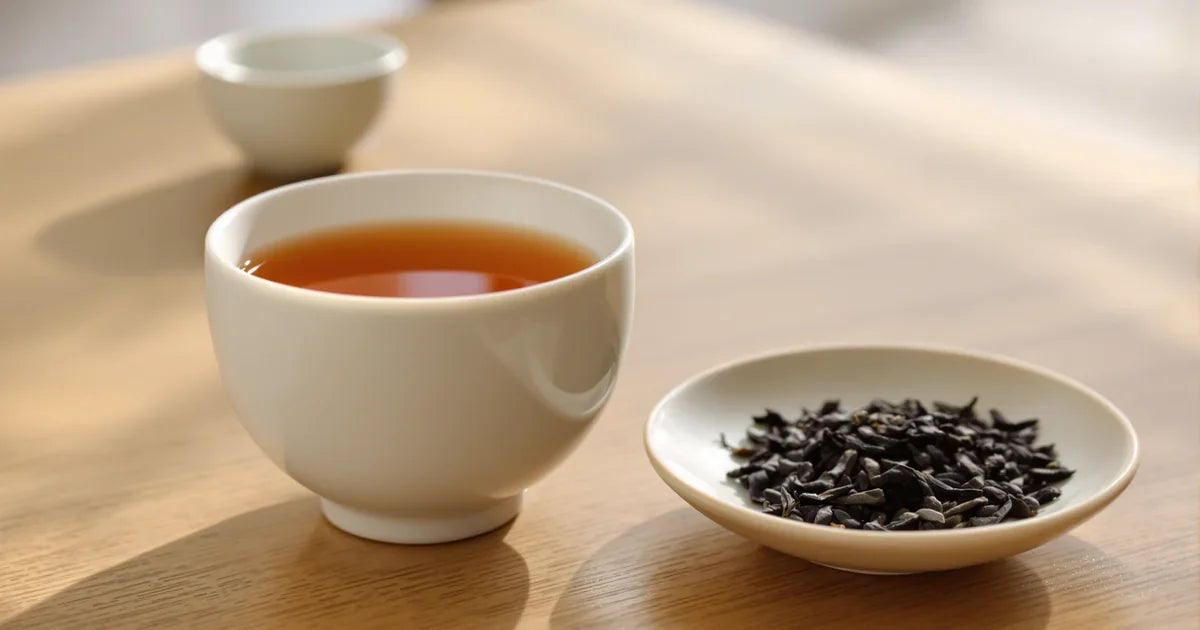

Kukicha, or stem tea, comes from stems and leaf stalks; Konacha from fine leaf fragments; and Mecha from bud tips. Sugimura, a Japanese tea instructor at the tea company Ujitawara Seichajo, says that the three parts are sorted during the finishing process and that Konacha is collected while Sencha or Gyokuro is being finished. Outside Japan, the name kukicha is also used for a roasted twig tea from the macrobiotic tradition. The name alone does not tell you which tea is in the bag.
What are Kukicha, Konacha, and Mecha?
Japan's national tea industry body (Nihon Chagyo Chuokai) defines all three in its green tea labeling standard, which places them alongside Sencha, Gyokuro, and Hojicha as tea types in their own right. The standard lists stem tea as Kukicha or Boucha, tea with a high proportion of stems and leaf stalks. Under its definitions, Konacha includes sifted coarse powder and cut leaf, and Mecha is bud tips sieved out in the finishing of Sencha or Gyokuro.
A bag of Kukicha and a bag of Sencha can come from the same crude tea, with each made mostly from a different part of it. Stems are picked and steamed together with the leaves. The differences become easier to see when the three sorted teas sit side by side:
| What to compare | Kukicha | Konacha | Mecha |
|---|---|---|---|
| Part of the shoot | Stems and leaf stalks, often with some leaf | Fine fragments, coarse powder, and cut leaf | Small buds and leaf tips |
| Separated by | Stem sorters | The finest sieve | A slightly coarser sieve |
| In the bag | Green stems and stalks; roasted versions are brown | Fine, powdery bits | Small, tightly rolled bits |
| Comes from | Sencha, Gyokuro, or Tencha | Sencha or Gyokuro | Sencha or Gyokuro |
| In the cup | Clean, with a distinct, cool sweetness | Strong, quick to brew, and deep in color | Strong and rich |
| Brewing | Start where you would with Sencha | Keep the steep short; use a tea strainer | Start where you would with Sencha; do not let it steep long |
Where the stems, fragments, and buds come from
In outline, this is how green tea is made: the early stages produce aracha, or crude tea, and finishing (shiage) turns it into a product ready to sell. Finishing shapes the leaf and separates the parts that become these three teas; what remains is the main tea.
Crude tea usually moves through wholesale channels to a tea company or merchant, a tonya, for finishing. Some producers finish what they grow themselves. Work in a finishing factory can include sieving, blending, drying, grinding, and roasting; the sequence and machines vary with the tea and the factory. The work falls into four broad steps, and the first two set aside the stems, fragments, and buds:
- Cut and sieve the crude tea by size, yielding Konacha and Mecha.
- Separate stems with electrostatic and color sorters. An electrostatic sorter draws stems toward an electrode under high voltage; a color sorter uses a camera and air jets to sort stems from leaves by color. The collected stems can become Kukicha.
- Winnow the tea with a toumi, a fan that carries away light dust.
- Dry and fire the main tea, with its final firing called hiire, then blend lots where needed.
The main tea is called honcha, and the material sorted out of it is demono, the source of Kukicha, Konacha, and Mecha. The national tea industry body's specification for Japanese tea as a geographical indication dates finishing to the Edo period (1603–1868), when it was done to preserve the tea's quality and shape its appearance and flavor. It also made the tea worth more.
Kukicha, the stem tea
Kukicha is a tea made largely from stems and leaf stalks. According to the Global Japanese Tea Association (GJTA), it began as a by-product of making Matcha, Gyokuro, and Sencha. Its base tea can vary; whatever the base, the slender stalks give each batch a recognizable look.
Stems removed from Tencha, the leaf ground into Matcha, have seldom been used for anything but roasted tea. Yet Kyoto Prefecture's tea research institute reports that those stems contain more L-theanine than Tencha leaves.
Green Kukicha has a refreshing taste that makes it easy to drink, and a cool, distinctive sweetness. Dry, one Kukicha we tasted smelled of igusa, the rush used for tatami mats; brewed, it carried a faint green note with its stem aroma and brought a tea field to mind.
Karigane and Shiraore
Karigane and Shiraore are trade names for stem tea in Japan, not names in the labeling standard. Masachika Maruya, president of the Kaga Boucha roaster Maruhachi Seichajo, says tea-producing regions use both names for stems they sell as green tea. A chart from Ishikawa Prefecture's industrial research institute gives the name Karigane to stems from first-flush tea finished as Sencha.
Japanese stem tea and macrobiotic twig tea
One brand sold in the US describes its macrobiotic twig tea as twigs and mature leaves that have been roasted and aged for two to three years. Japan's Kukicha instead uses stems sorted out when green tea is finished.
Sannen Bancha comes closer to that brand's description, though it is a separately named Japanese tea. The GJTA sets out two methods for making it. For one, makers steam and dry firm summer or autumn leaves, store them at room temperature for three years, then roast the leaves lightly. For the other, they leave bushes unpicked for three years, cut the branches in winter, and chop, steam, dry, and lightly roast them.
Boucha and roasted Kukicha
Boucha (also spelled bocha) is the labeling standard's other name for Kukicha, but in Ishikawa it means roasted stems, a stem Hojicha sold as Kaga Boucha. The prefecture's industrial research institute outlines one way to produce it, beginning with first-flush stems. Kukicha itself starts out green, though the GJTA reports that roasted versions are now common.
Is Kukicha the same as Hojicha?
Kukicha is named for the part of the shoot it is made of; Hojicha is named for roasting. The labeling standard describes Hojicha as tea made by roasting Sencha, Bancha, or similar tea over high heat. Roast Kukicha and the result is stem Hojicha, also called kuki-Hojicha. The same stems can go into a green Kukicha or into a roasted one that smells quite different.
That difference comes from how Hojicha is made. As Kyoto Prefecture's tea research institute explains, theanine and other amino acids break down at high roasting heat and contribute to the toasted aroma. Ishikawa Prefecture's industrial research institute compared roasted stem tea (Boucha) with leaf Hojicha. The stem tea had more of the compounds associated with roasted and floral aromas, more theanine, and less astringency. The institute does not say which harvests the samples came from. It does note that Hojicha in general is made from later harvests, such as the third and fourth flush, while Ishikawa's Boucha often uses first-flush tea.
Konacha and Mecha, sifted out in finishing
Konacha and Mecha are separated out during finishing: Konacha by the finest sieve, Mecha by a slightly coarser one. Konacha is made of bits of leaf and Mecha of bud tips, and the two differ in the dry tea and in how each brews. The tea company Tezumi says both are often used in tea bags.
Konacha, the fine fragments
Konacha's small pieces release flavor quickly, and the fine powder among them gives a strong cup with a deep color.
Konacha, powdered tea, and the tea at sushi bars
Konacha keeps its leaf fragments through brewing, so you strain the tea before drinking it. Powdered tea starts with tea milled fine enough to disperse in hot water, leaving no spent leaves to remove. Both can look powdery in a packet, but add water and the difference is plain. Matcha is another ground tea: it is made by milling Tencha finely in a stone mill.
At sushi restaurants, tea may be called agari, shortened from agaribana, a term for freshly made tea served at a restaurant or for tea more generally. Japan's farm ministry says powdered tea is familiar as the agari of sushi restaurants, and Tezumi describes Konacha and Mecha as teas traditionally served there.
Mecha, the bud tips
Mecha tea is made up of bud and leaf tips rolled into balls. Its aroma is concentrated, and its taste is strong. The tea seller Nakamura Tokichi Honten sells Mecha from Sencha as Sen Jinko and Mecha from Gyokuro as Gyoku Jinko, and it files Jinko under Konacha. The labeling standard, by contrast, gives Mecha a name of its own.
How to brew Kukicha, Konacha, and Mecha
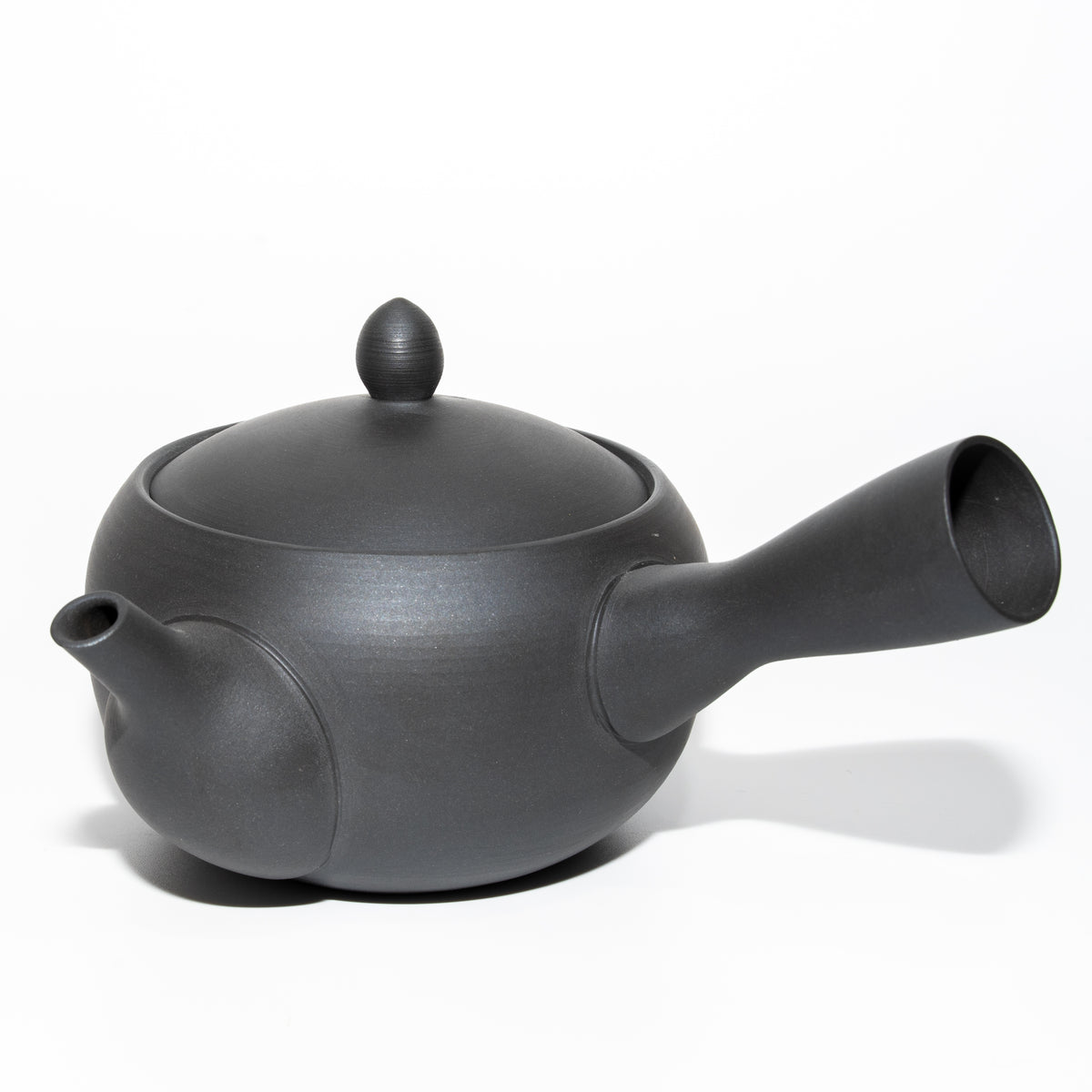
For green Kukicha and Mecha, start with the numbers in our guide on how to brew Sencha: 4–5g of leaf in 200mL of water at 70–80°C for 60–90 seconds. Brew roasted stems as you would Hojicha. For Konacha, Nakamura Tokichi suggests a short steep with a tea strainer.
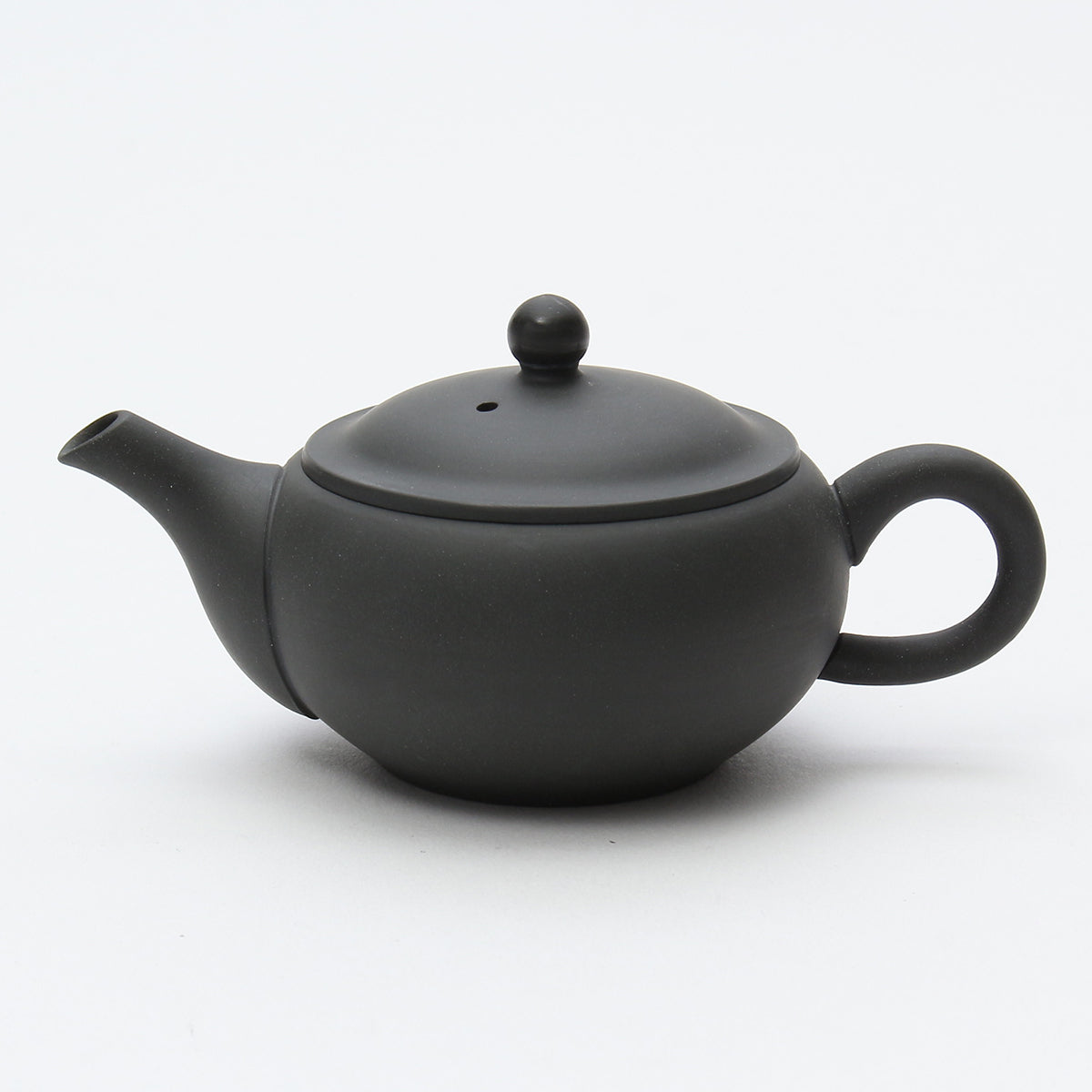
If you brew Konacha in a teapot without a strainer, the seller refers you to its Sencha or Gyokuro methods. It recommends the Sencha method for Sen Jinko and the Gyokuro method for Gyoku Jinko, the Mecha it files under Konacha. Since the pieces taste strong, it advises against leaving them long in the pot.
The GJTA considers Kukicha suitable for cold brew tea. All three are green tea, so they contain caffeine; how much reaches your cup depends on what the tea is made of and how you brew it.
Reading the label
Under the labeling standard, packaged green tea carries a product name from the standard's list, such as Kukicha, Konacha, or Mecha. The kanji part of that name may be written in hiragana, so one name can turn up in two different scripts. A seller may also add a common name, or the tea's form, in parentheses after it.
Look as well for whether the stems are green or roasted and whether the base tea is Sencha, Gyokuro, or Tencha. Nakamura Tokichi ties Konacha's quality to the Sencha or Gyokuro from which it came.
Tezumi says that in everyday Sencha, some stems and broken leaves are allowed to remain in the main tea. In a bag of Sencha you already have, any pale stems among the leaves are a small trace of that finishing choice. Kukicha, Konacha, and Mecha are among the types of Japanese tea shaped by the same process.
References
- Weathernews, a tea chart for Hachijuhachiya, with comments by Sugimura-san of Ujitawara Seichajo (2025) (in Japanese)
- Nihon Chagyo Chuokai, Green Tea Labeling Standard (in Japanese)
- Ministry of Agriculture, Forestry and Fisheries, aff (April 2017), Green tea feature, part 1 (in Japanese)
- Nihon Chagyo Chuokai, specification for the Nihoncha (Japanese tea) geographical indication (on the Ministry of Agriculture, Forestry and Fisheries website) (in Japanese)
- Tezumi, How Sencha is Made, Part 3: Shiage (Refining)
- My Japanese Green Tea, Japanese Green Tea Refining
- Mie Prefecture Agricultural Research Institute, Finishing aracha (in Japanese)
- Global Japanese Tea Association, Kukicha
- Kyoto Prefecture's tea research institute, Using Tencha stems as a food ingredient (in Japanese)
- Waraku web, interview with Maruhachi Seichajo on Kaga Boucha (in Japanese)
- Ishikawa Prefecture's industrial research institute, Aroma compounds of Boucha (seminar slides, 2013; Internet Archive copy) (in Japanese)
- Global Japanese Tea Association, Sannen Bancha
- Nakamura Tokichi Honten, Konacha
- Fukuoka Agriculture and Forestry Research Center, Yame branch, Producing powdered tea on a Sencha line (in Japanese)
- Digital Daijisen (Kotobank): agari and agaribana (in Japanese)