
Tea begins in China — not as a beverage but as a leaf. The earliest plausible records of tea consumption place it in the Yunnan province in the southwest, where wild Camellia sinensis trees still grow to heights that would dwarf a Japanese tea bush. For millennia before it reached Japan, Persia, or England, tea was Chinese — medicine, ritual object, art form, and eventually national drink.
Understanding China's tea history is not just a prelude to Japanese tea. It is the story of how an extraordinary plant was transformed by successive cultures, dynasties, and tastes — and how those transformations rippled outward across the world. Our history of tea in India follows another outward route.
The Origin of Tea: Legend and Archaeology
The most widely told origin story credits Shen Nong (神農), the mythological Divine Farmer who is said to have tasted plants systematically to identify their properties. Around 2737 BCE, leaves from a wild tree reportedly fell into his boiling water — and tea was discovered. The story is legend, but it carries truth in its framing: tea was understood as medicine long before it was understood as pleasure.
Archaeological evidence from Yunnan and Sichuan suggests wild tea plants were known and used well before the Tang Dynasty. The mountains of southwestern China remain the genetic center of Camellia sinensis diversity — where both the small-leaf variety (used for most Japanese and Chinese green teas) and the large-leaf Assam variety originated.
Tang Dynasty: Tea as Culture (618–907)
The Tang Dynasty is when tea crossed from medical use to cultural practice. The emperor's court drank it. Monasteries adopted it. The Silk Road carried it westward. And the poet-scholar Lu Yu wrote the Chajing (Classic of Tea, 780 CE) — the world's first book devoted entirely to tea.
Lu Yu's Chajing covered everything: the plant's botany, cultivation methods, processing techniques, water quality, brewing equipment, and the philosophy of tea drinking. In it, Lu Yu described tea as a drink fit for people of virtue — a framing that would echo through centuries of Japanese tea culture. The Chajing's insistence on quality, attention, and the right mental state for drinking tea is recognizable in everything from the Zen tea ceremony to a careful modern brew.
The dominant tea form in the Tang was compressed cake tea (bingcha): steamed leaves packed into cakes, which were then roasted, powdered, and dissolved in hot water. This was the tea that Japanese envoys to the Tang court first brought back to Japan — the predecessor of what would eventually become Matcha. See our history of Japanese tea in the Nara and Heian periods for how this transmission unfolded.
Song Dynasty: Powdered Tea and Competition (960–1279)
The Song Dynasty refined Tang tea into something more elaborate and, in some ways, more recognizable to modern Matcha drinkers. Dancha — more finely processed compressed cakes — was whisked into hot water using bamboo whisks, producing a frothy bowl not unlike modern Matcha preparation.
Emperor Huizong (1082–1135), a dedicated tea aesthete, wrote his own tea treatise and instituted formal tea competitions at court. Song tea culture elevated the visual experience: white-glazed bowls became the preferred vessel because they showed the bright green froth most clearly. The importance of shade cultivation (to intensify green color and flavor) was already understood.
The tocha competitions — guessing the origin and quality of tea by tasting — that spread to Japan during the Kamakura and Muromachi periods were a direct cultural import from Song China.
Ming Dynasty: Loose-Leaf Tea Wins (1368–1644)
The Ming Dynasty brought the most consequential shift in tea history: the abandonment of compressed cakes in favor of loose-leaf tea. The Hongwu Emperor reportedly decreed in 1391 that compressed tribute tea was too burdensome to produce, effectively abolishing it as the state standard.
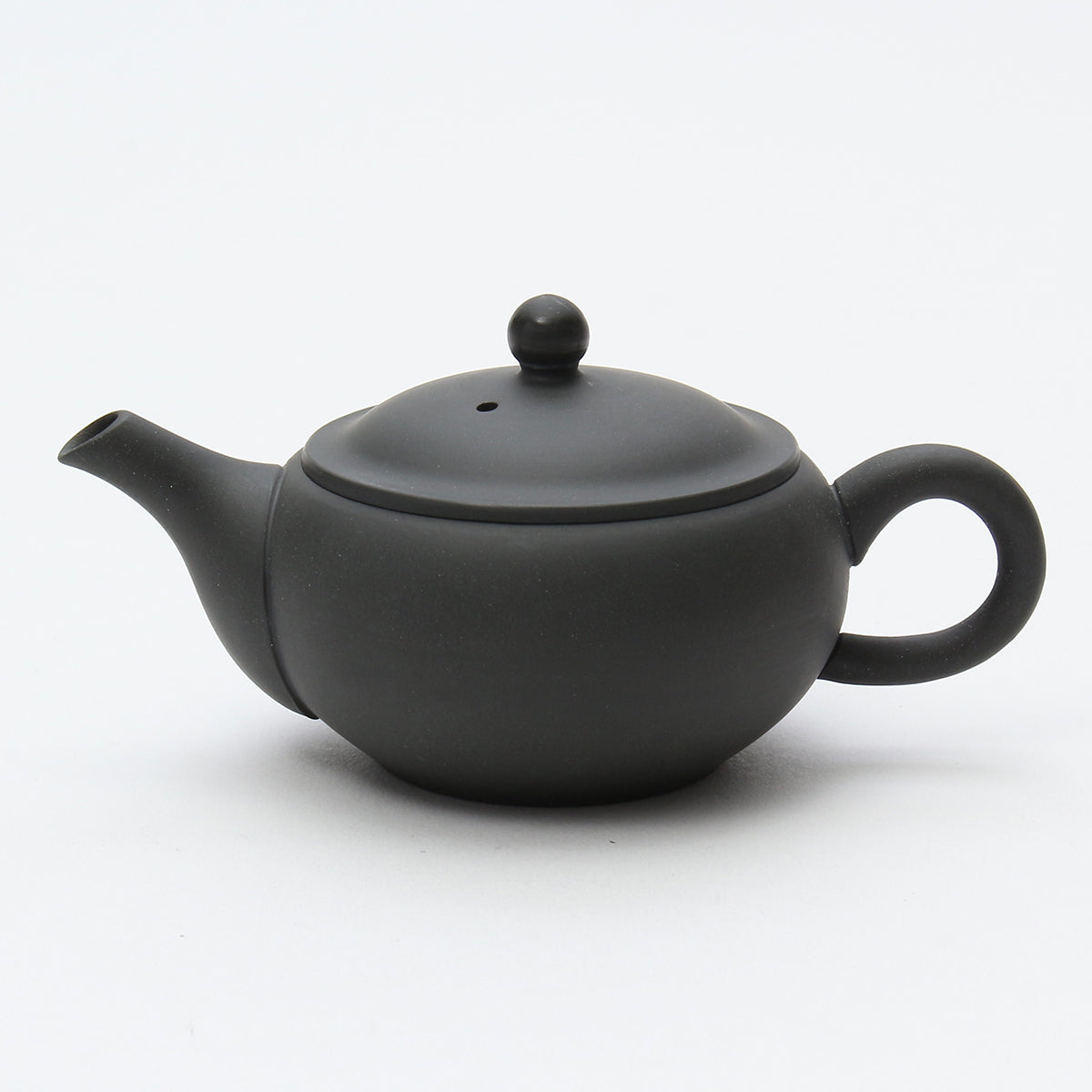
The shift to steeping loose leaves in hot water — the method used for most tea worldwide today — transformed tea culture. Ceramic teapots became central; Yixing clay pots from Jiangsu Province became the gold standard. The diversity of Chinese tea expanded: the same basic leaf could now be processed into green tea (unoxidized), oolong (partially oxidized), or what the West would later call black tea (fully oxidized). The Ming period saw Chinese tea diversify into most of the categories that define it today. Our guide to oolong tea keeps that semi-oxidized branch separate.
This shift also affected Japan — where the Song whipped-tea tradition was preserved and refined into the Matcha ceremony, becoming increasingly distinct from what China itself was doing. Japan's tea culture diverged precisely because China changed and Japan did not follow.
China's Tea Legacy Today
China remains both the world's largest tea producer and consumer. The six classic categories — green, white, yellow, oolong, black (hongcha), and dark (puerh) — cover an extraordinary range of processing and flavor. Yunnan's ancient gushu (old tree) puerh, Fujian's white tea, Zhejiang's Longjing, Guangdong's oolong — the diversity within a single country's tea culture exceeds the entire output of most tea-producing nations.
For Japanese tea, China's legacy is foundational. Eisai brought not just seeds but the entire Zen tea practice from Song China in 1191. The tea ceremony, the concept of tea as a path to mental clarity, the emphasis on quality water and attention — all of it has Chinese roots. Modern Japanese tea diverged significantly from those roots, but it grew from them. And the compressed cakes that Tang envoys brought to Japan in the 8th century can be traced as a direct ancestor to the Matcha in your bowl today. See our guide to oxidized teas for how China's black and dark teas developed separately from the Japanese green tea tradition.
References
- Chinese Text Project — Chajing (茶經) — A digital classical-text edition of Lu Yu's Chajing.
- Chinese Text Project — Daguan Chalun (大觀茶論) — A digital classical-text edition of Emperor Huizong's Daguan Chalun.
- Chinese Text Project — Chalu (茶錄) — A digital classical-text edition of Cai Xiang's Chalu.
- Lu et al. (2016) — Earliest Tea Evidence, Scientific Reports / PMC — A peer-reviewed Scientific Reports article on archaeological tea evidence in China.
- Wambulwa et al. (2021) — Tea Origin Yunnan/Sichuan, Frontiers in Nutrition — A peer-reviewed Frontiers in Nutrition article on tea origin and domestication research.
- Li (2022) — Daguan Chalun Song Tea Study, HKBU Scholars — A scholarly publication record for research on Daguan Chalun and Song tea practice.
Frequently Asked Questions
Where are the earliest plausible roots of tea in China found?
We trace tea’s earliest plausible roots to Yunnan, with archaeological evidence of early use in both Yunnan and Sichuan. Tea was first understood more as medicine than pleasure.
What does the Shen Nong legend tell us about tea’s first use?
The 2737 BCE story is legend, but it matters because it frames tea as a medicinal leaf before it became a daily drink, ritual object, or cultivated art.
Why is Lu Yu’s Chajing such a turning point?
Written around 780 in the Tang Dynasty, Lu Yu’s Chajing organized tea botany, processing, water, tools, and mindset into the first full tea book.
How did Song Dynasty tea shape matcha-like preparation?
Song dancha was powdered and whisked with hot water, often judged by foam and color. That technique traveled to Japan and later fed the matcha tradition.
Why did the Ming move to loose-leaf tea matter today?
The Hongwu Emperor reportedly decreed in 1391 that compressed tribute tea was too burdensome to produce. The move to loose-leaf steeping made teapots central and helped green, oolong, and black tea diversify.