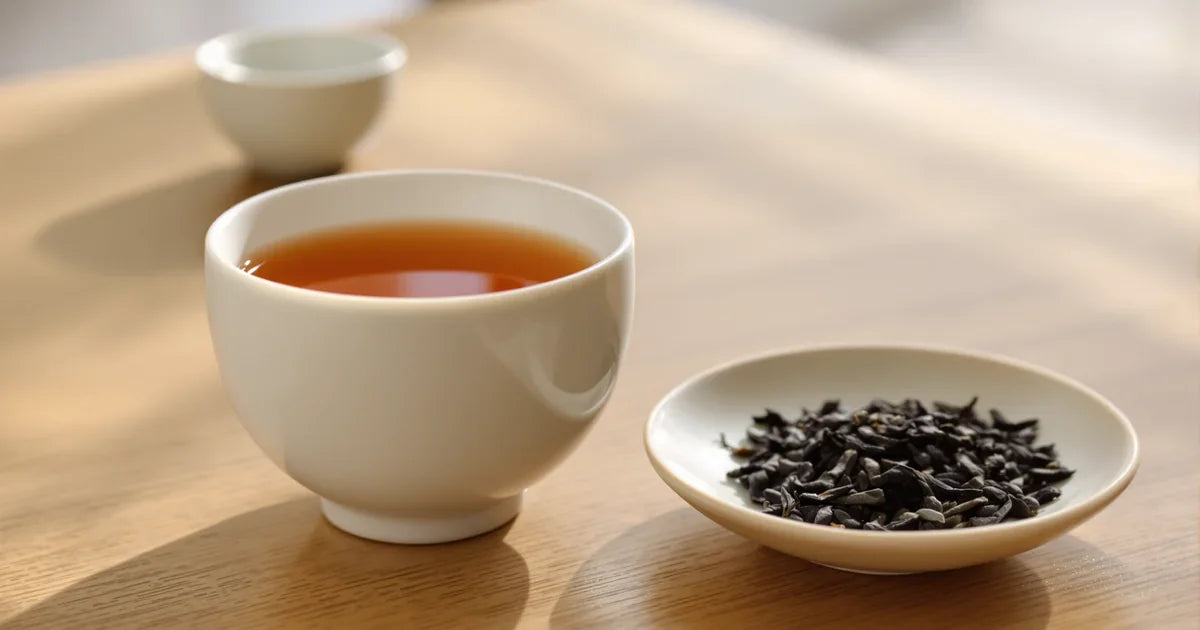

Before 1738, the Sencha that common people drank was dark, rough, and dull in color — nothing like the bright green, fragrant tea that fills Japanese cups today. The leaves were processed quickly and minimally. They tasted of something closer to cooked vegetation than fresh greenery. Then a tea farmer in Uji named Nagatani Soen spent years developing a new method, and when he finished, Japanese tea had changed permanently.
His development of what came to be called the aoseisencha seiho — the Green Sencha Method — transformed everyday Japanese tea from a rough beverage into something with vivid color, clean aroma, and layered flavor. The Edo period's popularization of tea was shaped in large part by his invention.
About Nagatani Soen
Nagatani Soen was born in Kyoto in 1681. The ancestor of the Nagatani family was samurai, but in 1592, they cultivated land in Kyoto, made a tea garden, and started a tea manufacturing business. Soen, engaged in the family business of tea manufacturing, was also a "leader of the village" who led the improvement of farmland. Even after his death in 1778 at the age of 97, he was respected as the founder of Japanese green tea and enshrined as "Chaso Myojin (god of the tea)" in the Daijingu shrine adjacent to his birthplace.
Connection to the Company Everyone Knows
Some may have heard the name Nagatani Soen in connection with "Nagatanien" — the company famous for "Ochazuke seaweed." Nagatanien was established by Nagatani Yoshio, the 10th generation of the Nagatani family. In the early days, Nagatanien was engaged in tea manufacturing and the sale of tools for the Sencha tea ceremony. Today most of its products have nothing to do with tea — but the ingredients of "Ochazuke seaweed" are made with Matcha. Nagatanien is a separate company with no connection to Far East Tea Company.
The Achievements of Nagatani Soen
The Green Sencha Method
The core of Soen's innovation was a sequence: steam the freshly harvested leaves to halt oxidation, then roll them repeatedly while applying heat, shaping the leaf into the tight needle form that defines modern Sencha. This rolling step was the departure from earlier practice. It was not just cosmetic — rolling while drying breaks down cell walls in a controlled way, releasing more of the leaf's aromatic compounds and allowing flavor to develop more fully. The result was a tea with vivid green color, clean bright aroma, and a flavor that ranged from sweet to grassy to umami-forward depending on how long you brewed it.
Before this method, Sencha was accessible only in rough form. After it, Sencha became something worth seeking out — and eventually, the tea that common people throughout Japan drank every day. Soen spent approximately 15 years developing and refining the process before he was satisfied enough to bring it to market.
At that time, the rich drank Matcha and the common people drank Sencha — but that Sencha was dark red and not very flavorful. The Green Sencha Method changed the equation. Ordinary people could now enjoy tea of quality that had previously only existed in shaded, ceremonial forms. Without this method, the Sencha that fills Japanese cups today would not exist.
He Succeeded in Selling Uji Tea in Edo
The company focused on Edo (Tokyo), which had become Japan's largest consumption area, and succeeded in expanding sales of Uji tea, which had begun to decline due to high land taxes. According to Yamamotoyama’s own history, when Soen visited Yamamotoyama in 1738, Yamamoto Kahee the second recognized the quality of Soen's tea and bought it immediately. Later, this Sencha was named "Tenka-ichi (the best in the country)" and spread from Edo across Japan. Yamamotoyama reportedly gave the Nagatani family 25 ryo of gold coins every year until 1875 in gratitude for the huge profit made.
Legacy
The Sencha in your cup — wherever you are reading this — is almost certainly made by a process that descends directly from what Nagatani Soen developed in a small village outside Uji in the 18th century. The needle shape of the leaf, the bright green color, the balance of sweetness and astringency in a properly brewed cup: all of it traces back to those 15 years of refinement and one trip to Edo.
Soen's contribution was not just technical. By making quality Sencha available to ordinary people at an ordinary price, he shifted the center of Japanese tea culture away from the ceremony and toward the daily cup. That shift — tea as something you drink because you love it, not because the ritual demands it — is the spirit that still defines how most Japanese people relate to tea. The ceremony endures, and it matters. But so does the cup you make for yourself at six in the morning without thinking too much about it.
The bright green Sencha in any cup today is Soen's method, refined but fundamentally unchanged. We carry teas shaped by that same lineage — leaves rolled into needles, steamed to preserve their green character, and brewed to bring out the balance he spent 15 years perfecting. Browse our green tea collection and pour a cup that connects back to Yuyadani.
Frequently Asked Questions
Who was Nagatani Soen?
Nagatani Soen was an Uji tea farmer born in Kyoto in 1681 and died in 1778 at age 97. We remember him as the founder of Japanese green tea and the maker of modern Sencha's base method.
What was the Green Sencha Method?
His aoseisencha seiho steamed fresh leaves to stop oxidation, then rolled them repeatedly with heat. That extra rolling step shaped needle-like leaves and drew out brighter aroma, color, and flavor.
What was ordinary Sencha like before 1738?
Before Soen's method, everyday Sencha was dark red, rough, and not very flavorful. It was closer to cooked vegetation than the bright green tea we know now.
Why did Yamamoto Kahee matter to Soen's success?
In 1738, the fourth Yamamoto Kahee of Yamamotoyama recognized Soen's tea in Edo and bought it at once. Sold as Tenka-ichi, it spread from Edo across Japan.
How did Soen's work affect modern Japanese tea culture?
Soen shifted quality tea from shaded ceremonial forms toward the daily cup. The steamed, rolled, green Sencha many of us drink today descends from his 15 years of refinement.