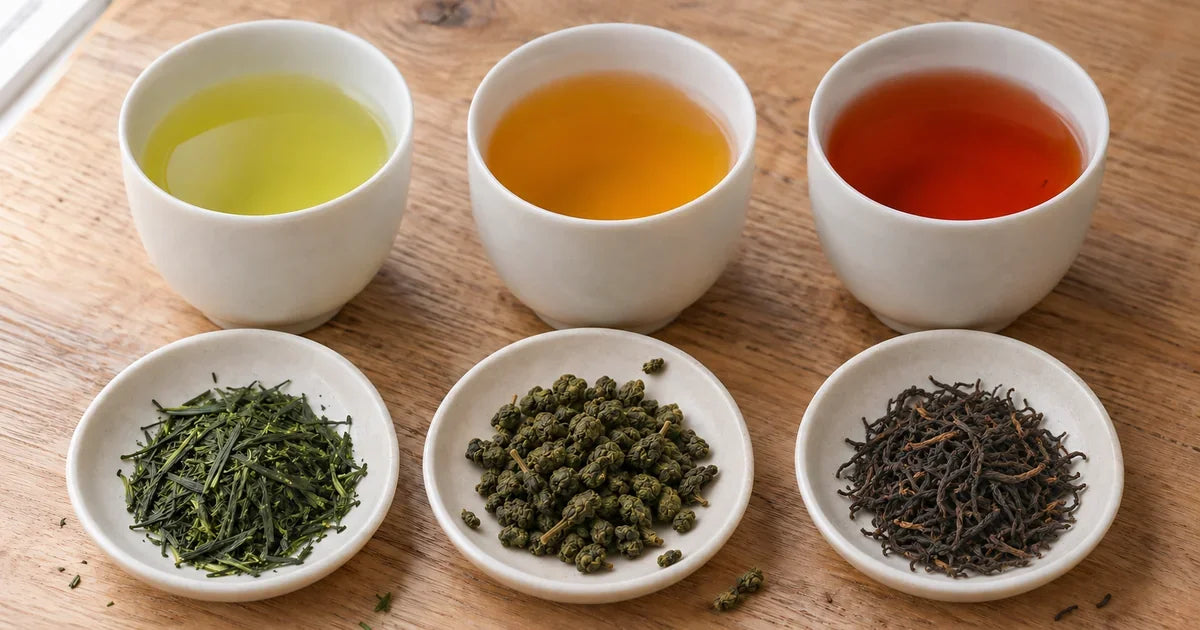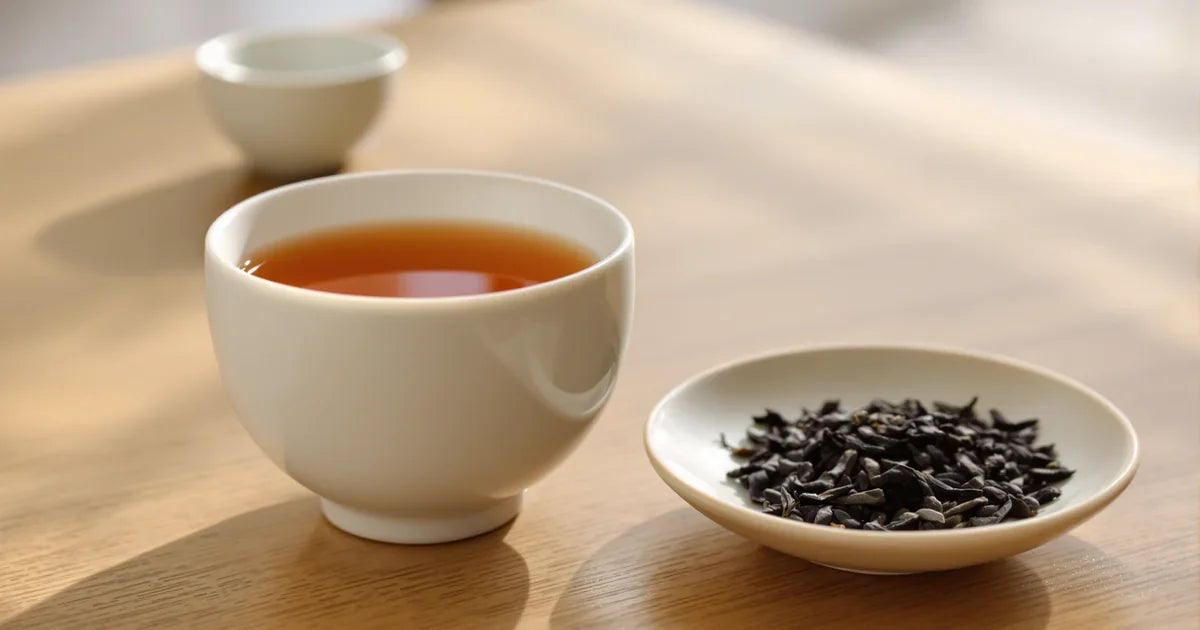
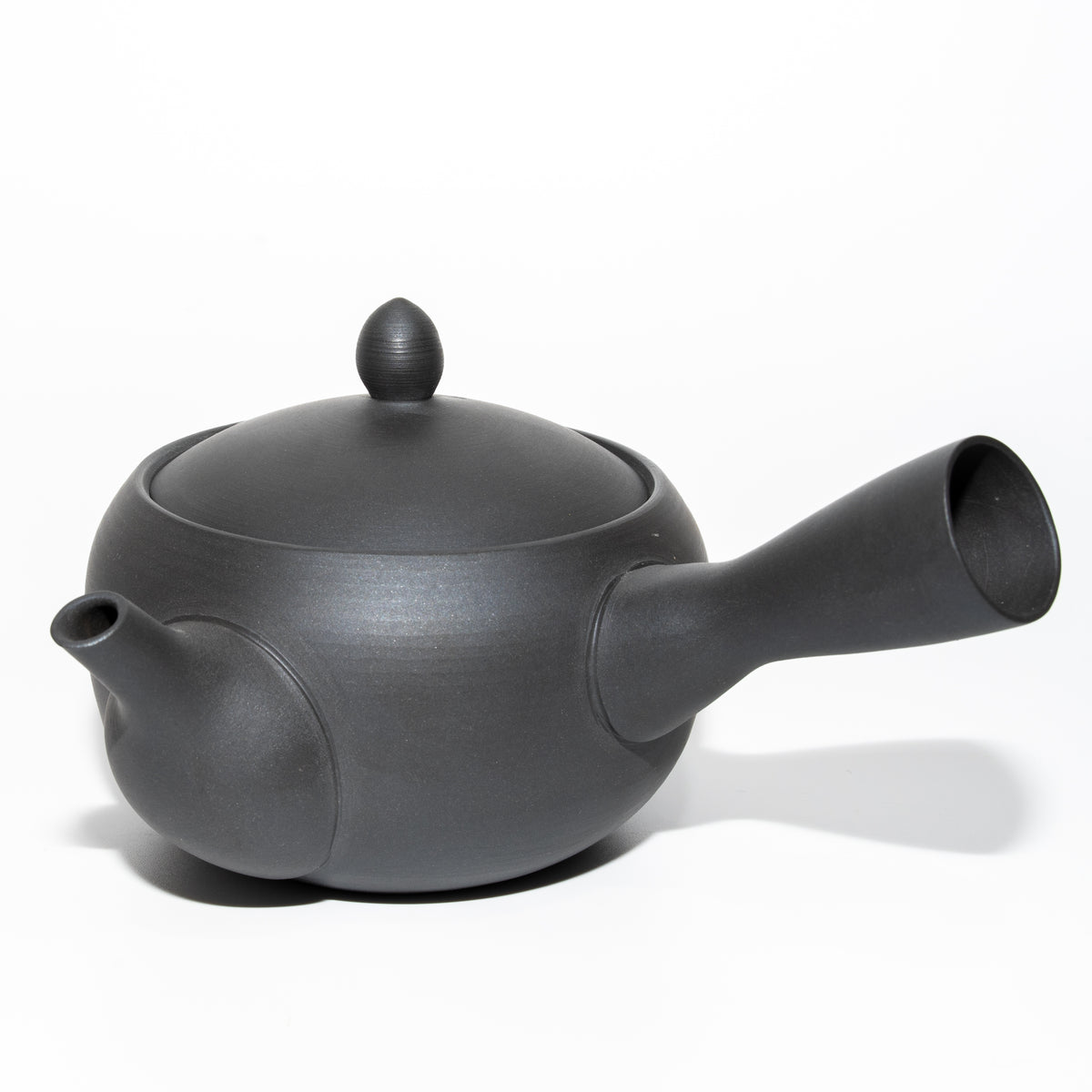
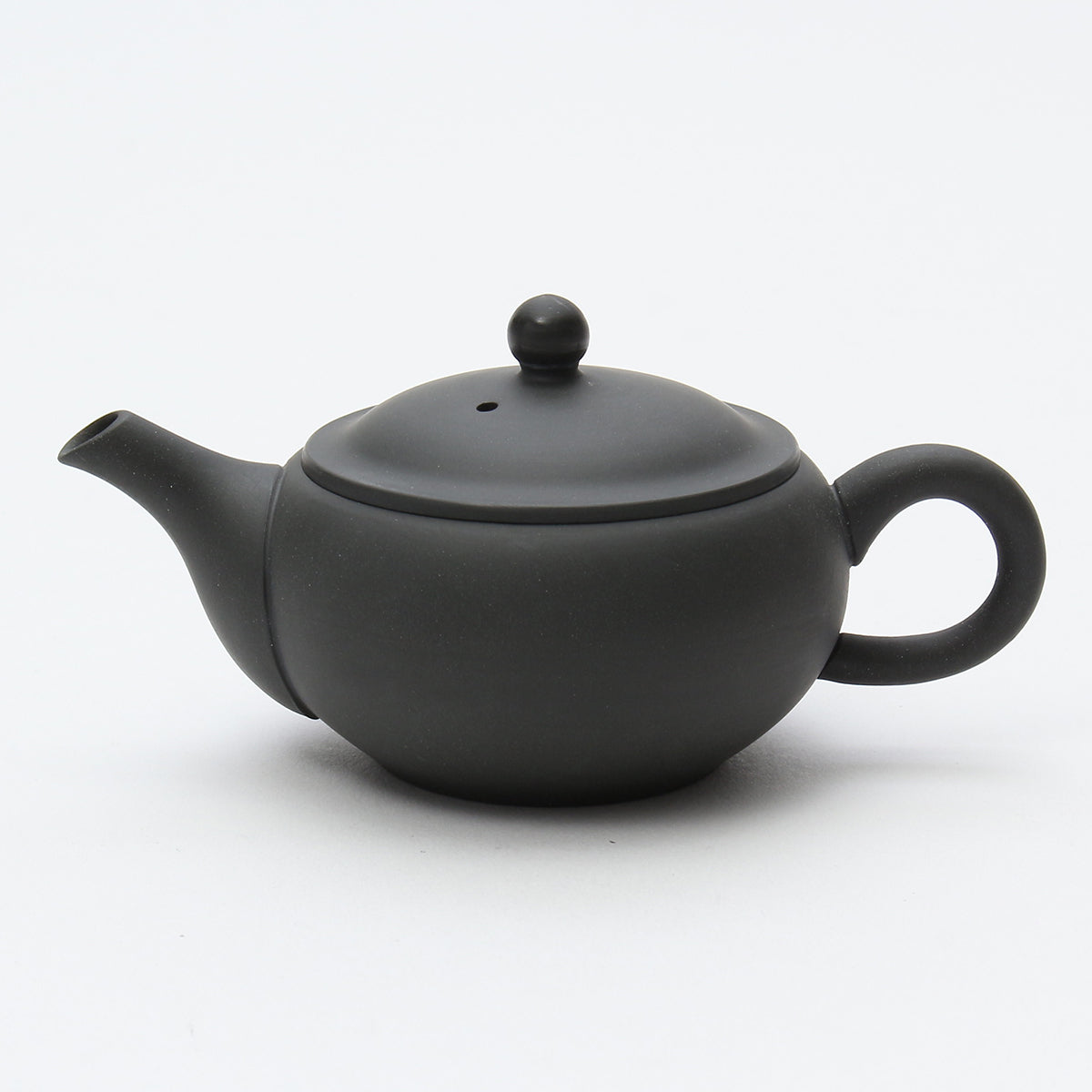

Tea has caffeine. A typical brewed cup lands somewhere between 20 and 70mg depending on the tea type — see the table below for specifics. But the number alone does not explain why a cup of Sencha feels different from a cup of coffee with the same amount of caffeine on paper.
Two compounds in tea may change how caffeine feels. In small studies, the amino acid L-theanine raised alpha brain activity, a sign of a relaxed mind without drowsiness; EGCG catechins might slow caffeine absorption in the gut, but that idea is unproven. If these effects hold, the result is a gentler, longer-lasting alertness — less spike, less crash. This article explains the mechanism. For caffeine amounts by tea type, the dedicated guides below are the right starting point.
Caffeine tolerance varies widely between individuals. The information here is educational, not a personal intake recommendation. If you have concerns about caffeine and your health, consult your healthcare provider.
Caffeine by tea type — where to look
| Tea type | Caffeine per 100mL (brewed) | Detailed guide |
|---|---|---|
| Sencha | ~20mg | Green Tea Caffeine Guide |
| Gyokuro | ~160mg | Green Tea Caffeine Guide |
| Matcha (per serving, ~2g) | ~64mg per serving (MEXT Standard Tables (eighth revision): Matcha powder 3,200mg/100g × 2g) | Matcha Caffeine Guide |
| Oolong | ~20mg | Oolong Tea Caffeine Guide |
| Hojicha | ~20mg | Hojicha Caffeine Guide |
Source: MEXT Japanese Standard Tables of Food Composition (eighth revision), item pages for Sencha, Gyokuro, Matcha, Oolong, and Hojicha.
Why tea caffeine feels different from coffee
Tea and coffee both deliver caffeine to the same adenosine receptors in the brain. The difference is what else arrives with it.
In small human studies, L-theanine — found almost exclusively in Camellia sinensis, the tea plant — increased alpha wave activity in the brain. Researchers read this as a sign of a relaxed mind without drowsiness; alpha activity also plays a role in attention. Caffeine, by contrast, heightens alertness, and too much of it can bring anxiety or jitters. Owen et al. (2008, Nutritional Neuroscience) compared caffeine with and without L-theanine against a placebo in 27 participants; the combination improved speed and accuracy on an attention-switching task.
There is also a second idea, less well understood: that EGCG — the primary catechin in green tea — might slow caffeine absorption in the gut, extending the curve rather than sharpening it. We have not found a human study showing this, so treat it as a hypothesis rather than established science.
In practice, tea often feels gentler than coffee. How much of this is the theanine effect, how much is the EGCG hypothesis, and how much is simply that most teas are brewed at lower caffeine concentrations than coffee — these are still open questions.
For a deeper look at L-theanine specifically, our theanine guide covers the mechanism, the research, and which teas are richest in it. For the role of catechins, see our catechin guide.
What changes caffeine in your cup
Three factors shape how much caffeine ends up in your cup: what the tea plant produced, how the leaf was processed, and how you brewed it.
| Factor | Effect on caffeine | Example |
|---|---|---|
| Shade cultivation | Increases caffeine | Gyokuro, Matcha |
| Leaf maturity | Young buds and leaves higher | Young leaves > older leaves |
| Harvest season | Varies by flush | First and second flush > autumn and spring Bancha |
| Roasting | Cannot determine from these figures | Both about 20mg/100mL (MEXT), under different infusion conditions |
| Brewing temperature | Higher = more extraction | In one green tea study steeped for 2 to 10 minutes (Ikeda et al., 1972), the biggest jump in extraction came between 60°C and 80°C |
| Steeping time | Longer = more caffeine | 3 minutes extracts more than 1 minute |
Caffeine is, at its origin, the tea plant's insect defense — a bitter alkaloid that discourages predation. Young buds and leaves hold more of it than older leaves. Shade cultivation reduces the light-driven conversion of theanine into catechins, and shaded shoots tend to be higher in both caffeine and theanine. That is part of why Gyokuro tastes so rich and focused — not just mellow.
Processing can affect caffeine content. In the MEXT tables, Hojicha and Sencha infusions both come to about 20mg per 100mL, but they use different infusion conditions; these figures cannot isolate the effect of roasting. MEXT also lists oolong infusion at about 20mg per 100mL under its own infusion conditions. Shade, harvest timing, and how you brew can also affect caffeine content. Our covered cultivation article goes into the shading mechanism in detail. For how brewing temperature and steeping time affect extraction across different teas, see our tea and temperature guide.
Caffeine in tea is not simply a stimulant to manage — it is one part of a system. The theanine, the catechins, the temperature of the water, the age of the leaf: these interact. Understanding the system makes it easier to find the right tea for the right moment. Hojicha is not a lower-caffeine shortcut: it tastes mellow, but the MEXT tables put its infusion at about the same level as Sencha. NARO recommends cold-brewed Sencha for people concerned about caffeine. In NARO's measurements, Sencha steeped in refrigerator-cold water (about 10°C) released about half the caffeine of a 2-minute brew at 80°C, and the level did not rise with 16 to 24 hours of steeping. Cold brew is not caffeine-free, and the amount in the cup depends on how much leaf you use. Whether that is a morning bowl of Matcha, an afternoon Sencha, or a pot of roasty Hojicha with a meal — it starts with the leaf.
References
- MEXT — Japanese Standard Tables of Food Composition (Gyokuro infusion) — item page for the gyokuro infusion composition data.
- MEXT — Japanese Standard Tables of Food Composition (Matcha powder) — item page for the matcha powder composition data.
- MEXT — Japanese Standard Tables of Food Composition (Sencha infusion) — item page for the sencha infusion composition data.
- MEXT — Japanese Standard Tables of Food Composition (Oolong infusion) — item page for the oolong infusion composition data.
- MEXT — Japanese Standard Tables of Food Composition (Hojicha infusion) — item page for the hojicha infusion composition data.
- Food Safety Commission of Japan — Caffeine Fact Sheet — Japanese food-safety fact sheet on caffeine.
- Owen et al., 2008, Nutritional Neuroscience — study on combined L-theanine and caffeine during cognitive task performance.
- NARO — National Agriculture and Food Research Organization — research organization covering Japanese tea cultivation and functional compounds.
- FDA — Consumer Update on Caffeine — guidance on daily caffeine intake for healthy adults.
If you want to explore further, our green tea ingredients overview covers the full spectrum of compounds in Japanese tea, and our green tea health benefits guide covers the broader research on what these compounds do. And if you are building your home collection, you can browse our tea leaves — each variety listed with growing method and harvest details.
The information here is educational and does not constitute medical advice. Caffeine sensitivity varies significantly between individuals. For healthy adults, the U.S. Food and Drug Administration considers up to 400mg of caffeine per day generally safe, but this threshold does not apply to pregnant, nursing, or sensitive individuals. If you have specific health concerns about caffeine intake, please consult your healthcare provider.
Frequently Asked Questions
Does tea have more caffeine than coffee?
Most teas are brewed at lower caffeine concentrations than coffee. Tea type and brewing matter: MEXT lists Sencha at about 20mg caffeine per 100mL and Gyokuro at about 160mg per 100mL.
How do brewing temperature and steeping time affect caffeine?
Hotter water and longer steeping extract more caffeine: in one green tea study, the biggest jump in extraction came between 60°C and 80°C, and 3 minutes extracts more than 1 minute. NARO recommends cold-brewed Sencha for people concerned about caffeine: in its measurements in refrigerator-cold water (about 10°C), extraction was about half that of a 2-minute brew at 80°C, not zero; the cup's amount depends on how much leaf you use.
What should caffeine-sensitive tea drinkers keep in mind?
Caffeine tolerance varies widely between individuals. If you have health concerns, consult your healthcare provider. Caffeine in tea is not simply a stimulant to manage — it is one part of a system. The theanine, the catechins, the temperature of the water, the age of the leaf: these interact. Understanding the system makes it easier to find the right tea for the right moment.