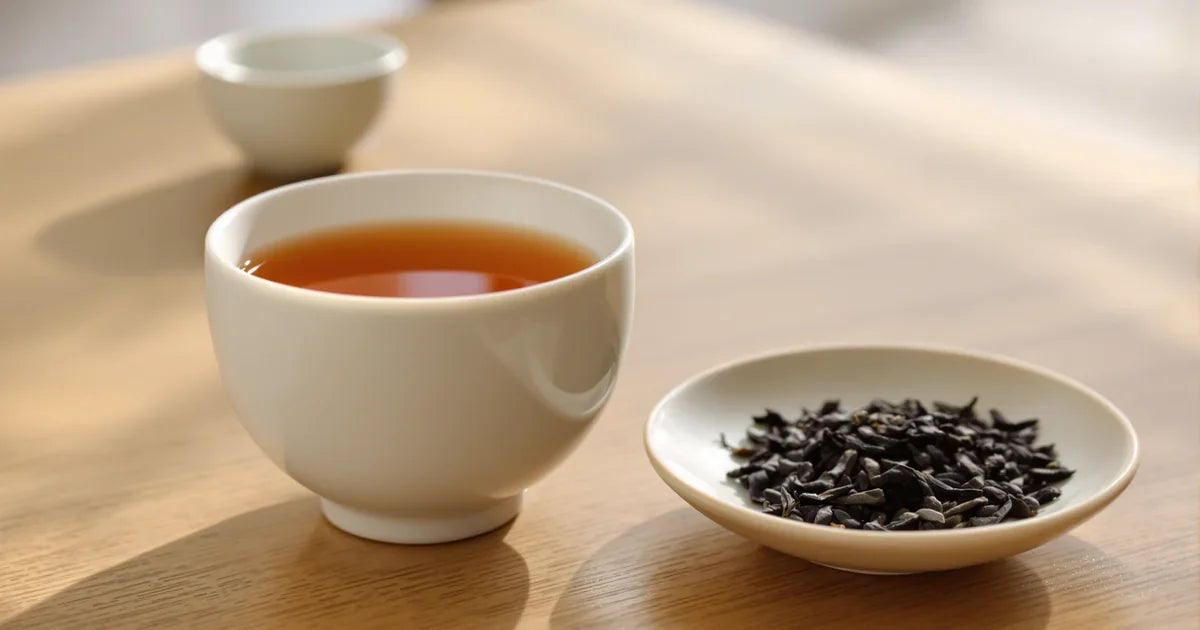

When you whisk Matcha, the fine foam invites a closer look at the leaf. Whisking with a chasen brings air into the bowl, and powder fineness matters too; extracted tea saponins can stabilize foam in experiments, but those experiments do not establish their contribution in Matcha.
Saponin is a naturally occurring glycoside. In an analysis of leaves from the Jinxuan tea cultivar, almost no saponins were detected.
| Property | Detail |
|---|---|
| Chemical class | Triterpenoid saponin (glycoside) |
| Taste contribution | Not quantified for saponin alone in the cited tea studies |
| Samples in the cited tea-plant analysis | Jinxuan leaves, flowers and seeds |
| Also found in | Soybeans, ginseng, licorice, chickpeas |
| Key property | Surfactant — foams in water |
| Daily intake from brewed tea | Not measured in the cited studies |
What saponin does in the cup
Saponin acts as a surfactant — a compound that reduces the surface tension between water and air. Experiments with saponins extracted from defatted camellia seed meal show foam-stabilizing properties in water. However, a study of six tea infusions found no significant correlation between saponin content and foaming properties; we cannot use that study to explain Matcha foam.
The cited studies do not isolate saponin's contribution to the flavor of a cup of tea. We therefore cannot say how its taste compares with that of catechins in the cup. In thick Matcha, prepared with a higher ratio of powder to water, texture is easier to notice. The foam there has a slight weight to it, a softness that sits on the tongue before the deeper savory notes arrive.
Powder fineness and vigorous whisking help explain Matcha foam: a study comparing Matcha powders found that finer powder foamed more readily. Sencha and other loose-leaf teas contain saponin too, but straining out the leaves does not tell us how much saponin remains in the cup.
Water temperature also plays a role. A Matcha study distinguished the temperature used for extraction from the temperature used for stirring. Under its experimental conditions, hotter extraction produced finer, more stable foam, while hotter stirring increased evaporation and foam loss. In the same experiment, higher extraction temperatures increased the amounts of tannin, soluble nitrogen and pectin extracted.
Saponin in tea versus other plants
Saponins occur in several plants, as the examples above show. What makes tea saponin structurally distinct is its triterpenoid backbone — a molecular configuration that differs from the steroidal saponins found in some other plants and contributes to its particular surfactant behavior.
The Jinxuan study compared leaf and flower samples with seeds at different stages of development; freshly mature seeds had more saponin than the leaf samples. The cited seed-and-leaf analysis does not measure the saponin content of a brewed cup or its contribution to taste.
For us, the foam on a well-whisked bowl of Matcha is an invitation to learn about the leaf, rather than a measure of any one compound. For a broader look at what the leaf contains, our guide to green tea ingredients covers the full range of compounds — catechins, theanine, caffeine, vitamins — alongside saponin.
What the research says
Researchers tested saponins isolated from tea leaves against fungi and for anti-inflammatory effects in rats. A separate study tested a tea-leaf extract containing saponins and caffeine for lipid effects in rats. Research suggests these effects are real in laboratory and animal-study contexts. The important qualifier is concentration: these findings typically come from saponin extracts, not from drinking brewed tea. These extract studies do not establish that drinking a cup of Sencha or a bowl of Matcha produces those effects in humans.
We still find saponin interesting as a component of tea. It is one part of a complex whole — alongside catechins, theanine, caffeine, and dozens of other compounds — that together give tea its character.
If you want to experience that foam for yourself, our tea leaves collection includes Matcha ground to a fineness that whisks well. The chemistry is already there in the leaf.
The health-related information provided here is drawn from published research and is provided for educational purposes. It is not medical advice. If you have specific health concerns, please consult a qualified healthcare professional.
References
- Tea-leaf saponin study — isolated saponins tested in vitro and in animal models; tea-extract lipid study — a saponin- and caffeine-containing extract tested in rats.
- Tea seed-and-leaf analysis; RDA saponin database announcement; chickpea saponin isolation; licorice glycyrrhizin analysis.
- Camellia seed-meal saponin experiment; six-tea infusion foam study; Matcha extraction and stirring temperature study; Matcha powder comparison; pea-protein and tea-saponin mixture study.
Frequently Asked Questions
Is saponin in tea safe?
We cannot judge the safety of saponin in brewed tea from the cited extract studies. The cited studies do not measure daily intake from brewed tea, and their extract findings do not establish those health effects from drinking a cup of Sencha or a bowl of Matcha in humans. If you have specific health concerns, please consult a qualified healthcare professional.
Is saponin found in plants other than tea?
Yes. Saponins also occur in soybeans, ginseng, licorice and chickpeas. What makes tea saponin structurally distinct is its triterpenoid backbone, a molecular configuration that differs from the steroidal saponins found in some other plants.
What helps Matcha foam?
We can point to powder fineness and vigorous whisking: a study comparing Matcha powders found that finer powder foamed more readily. Whisking with a chasen brings air into the bowl. Extracted tea saponins can stabilize foam in experiments, but those experiments do not establish their contribution in Matcha.